TEIKYO SDGs Report:Information Engineering Supporting the Medical Field
- Living two clinical lives: one with humans and one with animals -
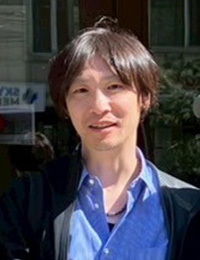
Keizo Wanai, Senior Assistant Professor Medical Engineering Course Faculty of Fukuoka Medical Technology Department of Medical Technology Teikyo University Fukuoka
Inspired by his grandmother's hemodialysis, he aspired to become a clinical engineer. After graduating from a vocational school, he worked as a clinical engineer in a hospital for 17 years. He also served as a director of the Hiroshima Prefectural Association of Clinical Engineers, and through an encounter at an academic conference, he developed a close relationship with Professor Miyata, a statistician. In 2021, he took up a teaching position at Faculty of Fukuoka Medical Technology, and subsequently obtained a master's degree. Currently, while enrolled in the doctoral program at Yamaguchi Graduate School School, he is engaged in research on veterinary engineering and overseas medical support activities.
To summarize this report ...
I have worked in hospitals for 17 years as a clinical engineering technician, contributing to human healthcare.
Back in the early days of IT, when hospitals didn't have dedicated IT engineers, they had the experience of building everything from electronic medical records to server management through trial and error.
My interest in statistics stemmed from a connection with a researcher I met at a clinical engineering-related academic conference, and I began working on integrating clinical engineering and statistics in hospitals. In 2021, I transitioned to a faculty position at Faculty of Fukuoka Medical Technology.
For many years, we have been working to improve working conditions in healthcare settings in developing countries.
Currently, they are also engaged in veterinary engineering research, working to establish standards for the safe use of equipment, particularly for small dogs.
The environment for animal healthcare lags behind that of human healthcare, with challenges including the lack of monitoring equipment and guidelines.
As living standards improve, the demand for pets increases, and as poverty expands, challenges in human healthcare increase. Clinical engineering efforts will also contribute to building future social infrastructure.
My grandmother gave me the path to clinical engineering.
A clinical engineering technician is a nationally certified professional who operates and maintains life support equipment such as hemodialysis machines, ventilators, and cardiopulmonary bypass machines. My motivation for pursuing this career stemmed from my grandmother's experience with hemodialysis. I learned about this profession, which involves supporting patients' lives while working with medical equipment. My first job was at a small hospital. At the time, there wasn't enough space to establish a separate clinical engineering department, so I belonged to the clinical engineering division within the nursing department and worked in clinical settings for 17 years.
My responsibilities extended beyond just operating and maintaining medical equipment. At the time, many hospitals were beginning to implement electronic medical records and PACS (Picture Archiving and Communication System) for managing medical images. However, only a limited number of hospitals had the budget to hire dedicated system engineers. As a result, each department needed someone with expertise in equipment and systems, and I was entrusted with that role. I laid LAN cables throughout the hospital, managed servers, and handled the implementation of electronic medical records and PACS. I also tackled the challenge of how to extract and utilize data from monitors used in operating rooms. I believe those 17 years were spent navigating a transitional period of rapid medical informatization, learning by trial and error on the ground.
Statistics paved the way to becoming a teacher
My interest in statistics began while working at a hospital, where I presented at academic conferences and analyzed data. A turning point came around 2015, when I was looking for a speaker to invite as an officer of the Hiroshima Prefectural Clinical Engineering Technologists Association. At a symposium, Professor Kenhiro Miyata Faculty of Fukuoka Medical Technology, Department of Medical Technology Fukuoka University, was speaking about statistics. Professor Miyata, who holds qualifications in both clinical engineering and nursing, spoke in an easy-to-understand yet insightful way about how to handle patient data statistically. Since then, I have asked him to speak every year, and we have become close enough for him to give me his opinion on my research data. I have even had my name listed on one of his papers.
Professor Miyata joined the Faculty of Fukuoka Medical Technology in 2019. Through that connection, I was asked to join the faculty in the same department in 2021. I was hired with the understanding that there would be a need for people who can handle information in the clinical engineering field, and was positioned as a "clinical engineer who can handle information." At the time I joined, I only had a junior college degree, so I quickly obtained a master's degree. Currently, I am enrolled in the doctoral program at Yamaguchi Graduate School School and continuing my research.
Veterinary engineering, a field that has been lagging behind
Shortly after taking up my position as a faculty member, an encounter with a colleague involved in animal medicine led me to venture into a new research area: veterinary engineering. In particular, I am working on applying the knowledge of medical equipment and environmental management cultivated in clinical engineering to the field of animal medicine. It is said that the field of animal medicine is several decades behind that of human medicine. Monitors that are commonly used in human medicine are not yet fully utilized in animal medicine. Even when it comes to something as simple as the standard value of pressure that can be used safely, there are still many areas where established guidelines do not exist.
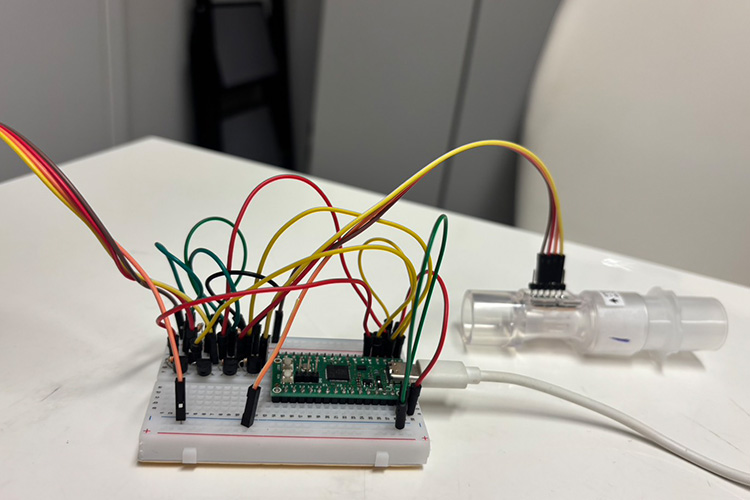
Currently, I am working on a research project where I am building experimental equipment on campus to acquire waveforms and data similar to those of animals, and verifying the safe limits of such experiments. Due to restrictions on experiments within the university from an animal ethics perspective, I am accumulating data using simulated equipment, publishing it as a paper, and aiming to have these results reflected in animal medical guidelines in the future. Currently, my main subjects are small dogs weighing less than 10 kg, such as Chihuahuas and Poodles. In parallel with my research, I am also involved in equipment development as a part-time employee at an animal medical equipment manufacturer in Omuta City, Fukuoka Prefecture. This is a field of medical-engineering collaboration where medicine and engineering work together, such as designing universal interfaces related to operability. The places I am involved with range from private animal hospitals to the animal medical center established by Yamaguchi University. Veterinary universities are required to establish animal medical centers, and I visit these various facilities of all sizes, collaborating with other professionals to determine the necessary systems for each.
Crossing Boundaries: Two Main Pillars
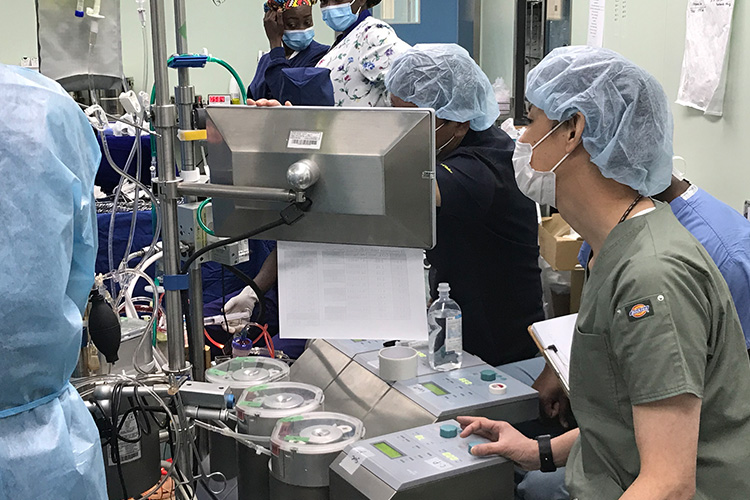
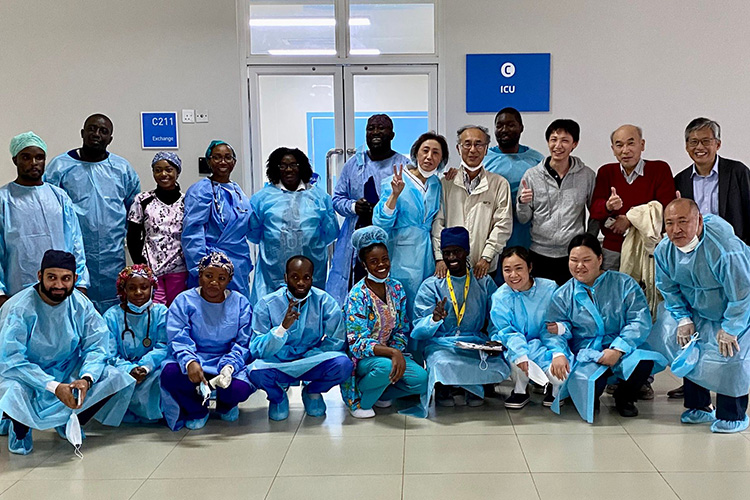
Meanwhile, clinical practice involving human beings continues to evolve worldwide. However, not all medical settings are at the forefront. I previously accompanied an NGO and participated in medical support activities in Zambia. Since Zambia does not have a national certification system for clinical engineering, I was granted a special qualification by the local Ministry of Health for a limited period of six months to a year to carry out the work. At the local hospital, I was in charge of setting up, configuring, and managing monitors, and since there was no equipment available locally to project surgical scenes into another room, I purchased everything from cables in Japan and brought it with me. I had to assemble everything on the spot, even deciding on the bandwidth of the connection to ensure that the video would be transmitted without delay. I feel a strong sense of purpose in these activities, and although I am not currently affiliated with a hospital in Japan, I continue to engage in medical support activities overseas. Recently, I have had more opportunities to be involved overseas in the form of joint research with companies.
I have a core principle that forms the backbone of my research. It was taught to me by my mentor during my student days: "Always pursue research in two fields." Even if one field becomes unsustainable, the other field ensures that the path is not cut off. In fact, having different focus areas—people and animals, domestic and international—has made it easier to flexibly shift my way of thinking, and above all, the way my network of contacts expands is completely different. I have been led to people and opportunities that I would never have encountered if I had focused on just one field.
Improving the clinical environment, and beyond
Moving between the two axes of people and animals, and domestic and international, my consistent focus has been on "improving the clinical environment." Whether I was tentatively implementing IT in hospitals, connecting cables in a hospital in Zambia, or currently testing safe pressure lines for small dogs, the essence of what I do remains the same: creating what is needed each time to suit the scale and needs of each site. In particular, the environment surrounding not only human medicine but also animal medicine is changing dramatically on a global scale. As evidenced by the fact that the term "companion animal" is beginning to be used instead of "pet," animals are increasingly being positioned as members of the family. The number of pets is continuing to increase in Asian countries as well, and the demand for animal medicine is sure to rise even further. On the other hand, the development of equipment and guidelines to support this is still not sufficient.
While we aren't working specifically for the SDGs, I've recently come to feel that my efforts—creating what's lacking in places where people are in need and continuously providing opportunities for improvement—are remarkably close to the SDGs' ideal of creating a borderless society and the sustainable society necessary to achieve it. And beyond creating the necessary environment in clinical settings for both people and animals, I can see the challenges facing society. What I'm involved in may seem like a niche field to some. However, it's full of hints for solving the challenges that will exist in society in the future.