

TEIKYO SDGs reportEducationfrom a Border Region Perspective
- Gradient Sensibility and SDGs -
Teikyo University Faculty of Education Department of Education and Culture Associate Professor Kaeiko Suzuki
After graduating from university, he taught at junior and senior high schools in Tokyo. After gaining several years of experience, he was involved in local educational activities at the Ministry of Education of the Republic of El Salvador in Central America. After returning to Japan, he went on to Graduate School to further his research on school education in Latin America. He joined Faculty of Education at Teikyo University, where he remains to this day. His research fields include international comparative education, Latin American regional studies, and teacher education, and in recent years he has focused on education in the United Mexican States.
To summarize this report ...
Education is a discipline that encompasses many areas that arise in society.
Professor Suzuki specializes in comparative education, with a particular focus on education in Latin America.
Over the past few years, I have been part of a research team that aims to combine border studies and comparative education, and I have been in charge of the US-Mexico border and have been investigating the educational situation in border regions.
Border studies focuses on the movement of people, goods, and cultures in border regions, focusing on what, how, and to what extent they pass through (permeability). Professor Suzuki conducts research from this perspective, focusing on the movement of people, labor, and children's education near the US-Mexico border.
Mexican schools often operate on a two- or three-shift system, which means that children often do not have enough time to attend classes. At the same time, because children spend a lot of time at home, it is difficult for parents to work long hours, and hourly wages are low. For this reason, there are cases where families cross the border into the United States every morning, where the children go to school and the parents take up jobs with higher hourly wages.
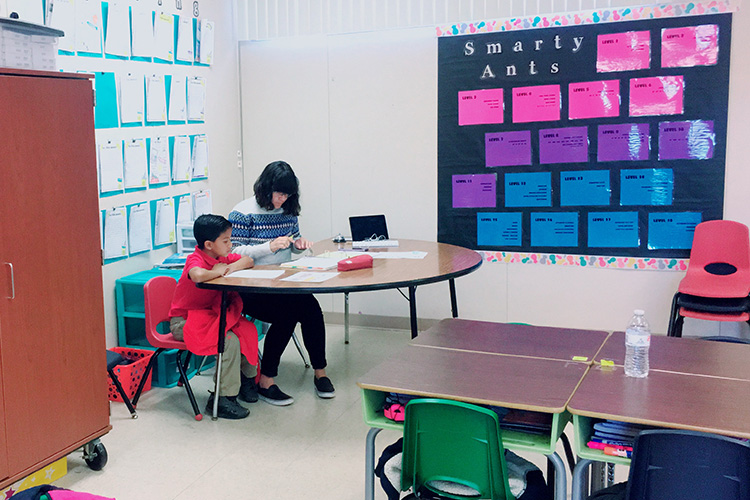
California's education law states that all children have the right to an education, and many schools have bilingual teachers who are fluent in Spanish (Mexico's first language) and English. Therefore, English Learners (ELs) can receive language support while attending classes.
This situation can be said to be already in line with the SDGs. By being able to choose a better situation while harmonizing well with the different environments of neighboring countries, children's education and lives will become more positive.
Latin America through the lens of education
My current research focuses on two main themes. One is a collaborative study of the US-Mexico border region, applying the framework of border studies to comparative education. The other is research focusing on school education and teacher education in Mexico. I originally worked as a middle and high school teacher after graduating from university. However, my interest in education abroad led me to quit teaching and take a position at the Ministry of Education of the Republic of El Salvador, where I engaged in education-related activities. When I visited a school in the mountains, I was surprised to hear the national anthem the children were listening to on the radio not from my own country but from neighboring Honduras. Radio waves have no borders. The village children were naturally learning about and experiencing the culture of their neighboring country. This scene was the starting point for my current research, which combines border studies and comparative education.
Researchers in comparative education have their own "fields"—regions and countries, such as Asia, Europe, Africa, North America, and Latin America. Given my familiarity with El Salvador, I have focused my research on Latin America. Many countries in this region share Spanish as their primary language and share many common historical and cultural backgrounds. However, their national governance systems are complex and intertwined, and educational diversity is abundant. Furthermore, their political situations and positions change depending on their relationships with neighboring countries like the United States. For this reason, I believe Latin America is an extremely interesting region for reexamining the meaning of borders from an educational perspective. While there has been active discussion of borders in the fields of political science and geopolitics, borders have received little attention in education, particularly comparative education. However, education is an academic field deeply connected to the functions of borders, such as nation-building, language, identity, and migration. Therefore, I believe border regions and education share a strong affinity.
Border "Permeability"
Borders on maps exist all over the world. In my current collaborative research, experts from Southeast Asia, Northern Europe, and North America are coming together to study the diverse borders in their respective fields. I am currently working on the second-longest border in the world, the US-Mexico border. Due to security concerns and ease of research, I am currently focusing on the area between San Diego, California, at the westernmost point of the US-Mexico border, and Tijuana, Baja California, on the Mexican side. Here, many Mexican children cross the border early every morning to attend school in the US. While junior high school students and older can walk to school alone, parents cross the border with their children in elementary school and younger, dropping them off at school before working in the US and returning home to Mexico in the evening. This lifestyle is not unusual; it is commonplace. The underlying factors are differences in the education system and economic situation. Mexican schools typically use two- or three-shift systems, with students rotating between the same building. Even if students attend school in the morning, they may return home by early afternoon. The shorter the school day and the longer children spend at home, the more difficult it is for parents to go to work. On the other hand, American schools have classes all day, from morning to afternoon. After dropping off their children at school, parents can work in the United States as cleaners or drivers. Because wage levels are also significantly different between the United States and Mexico, working in the United States can earn significantly more than working in Mexico. Furthermore, the United States also relies on Mexican workers, so there is a mutually supportive relationship.
We view this phenomenon not simply as "poverty" or "inequality," but as the "permeability" of borders. Borders are not walls that block everything; rather, like cell membranes, they selectively select what they allow through, how much, and how, pushing and attracting, creating differences in density. The concept of "permeability" explains this process. It posits that people, goods, information, and educational opportunities move, pushing and being pushed through the membrane of the border. Interestingly, accurate statistics on the actual state of cross-border school attendance at the US-Mexico border are rarely made public. California education law guarantees the right to an education to all children (assuming they hold US residency documents) regardless of address or status. Schools do not distinguish between cross-border school attendance and other "special" circumstances, and therefore do not publicly disclose their numbers. This institutional flexibility, which is not illegal but also invisible, creates educational diversity near the border.
SDGs are a gradation
Before conducting field research, I typically understand the situation in the target area through reports and data issued by international organizations, the country's Ministry of Education, and the government. Based on this, I conduct fieldwork by interviewing school district boards of education, principals, teachers, For parents and guardians. In my current research on the border region, I interview people on both the Mexican and American sides. For example, I interviewed people at a McDonald's located immediately after passing through immigration and entering the United States. Despite being in the United States, this place, where Spanish is the only language spoken, is a popular spot for many families who have crossed the border from Mexico every morning. They wake up at 4 or 5 a.m. in the dark, wait in the long immigration line, and finally cross into the United States. Here, they eat a quick breakfast and prepare for school. I also see children coloring in books and elementary school students doing their homework. I visit these tables to learn about their daily routines, school classes, and parents' feelings toward their children. Despite taking a break in the morning, everyone is happy to be interviewed. While students on both sides of the border are cheerful and willing to share their stories, educational environments vary from home to home. For example, during the COVID-19 pandemic, which closed the border, online classes were conducted across borders. However, many families lacked internet access, and in some cases, schools provided pocket Wi-Fi and devices. In schools on the Mexican side, even those with internet access had teachers unable to distribute teaching materials, so they regularly assigned homework in printouts. These varied responses revealed that even among Mexican students, their learning environments are quite diverse. In addition, in schools on the American side, classes are primarily conducted in English, but separate teachers teach English learners (ELs) in Spanish. An increasing number of schools are employing teachers with bilingual qualifications, and some offer programs not only for language education but also for economically disadvantaged students. This multicultural environment is "normal" in this region, where students live comfortably among people of different cultures, languages, and diverse backgrounds. From our Japanese perspective, this is a very diverse environment.
I believe this perspective is also useful for understanding color-coded frameworks like the SDGs. The 17 goals appear to have distinct colors and clear boundaries, but as we expand, the colors blend and create a gradient at those boundaries. Economic issues are borderless resource issues, and human rights are losing their boundaries amid globalization. Economics, education, gender, and poverty are inseparable global issues. I believe that understanding the SDGs requires both a border-based and a gradient approach. The key is to recognize how those boundaries function. Understanding their function—whether they are barriers, permeability, or both—will be essential in both education and considering the future of society. Education is an activity in which the "results" are hardest to see, yet it has the greatest impact on the development of people. By looking at society through the lens of education and examining education from the perspective of national borders, we may become even more aware of the gradient within which we live.