



Assistant Professor Department of Orthoptics Faculty of Medical Technology, Teikyo University
Professor Ryusei Takigawa

After graduating from Department of Orthoptics, Faculty of Medical Technology, Teikyo University in 2015, he will proceed to the graduate school of the same Graduate School and complete his doctoral course in 2023. From 2015 to 2023, he will serve as Teaching Associate in Department of Orthoptics, becoming Assistant Professor in 2024. He is particularly active in working to improve aniseikonia.

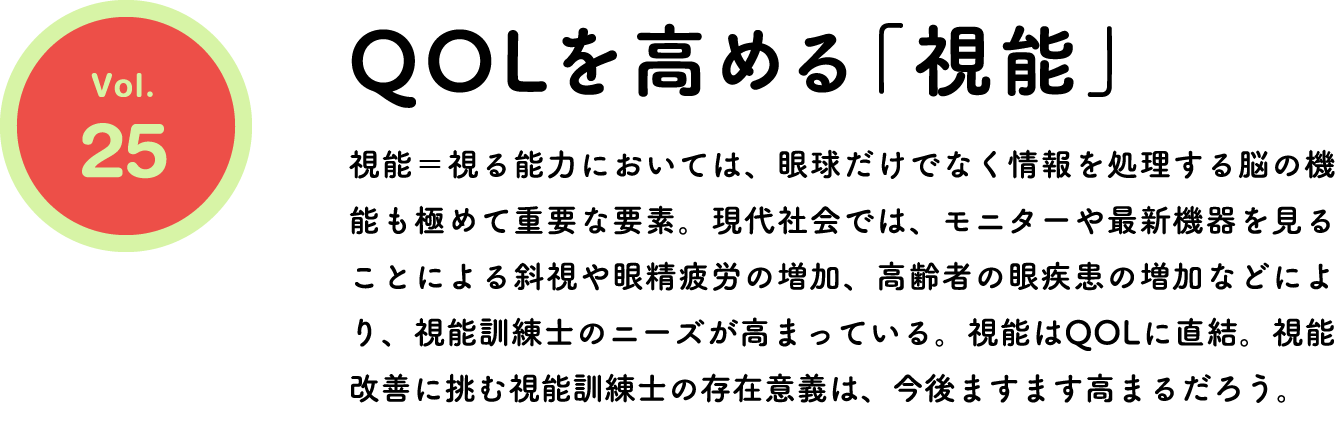




Visual acuity is a general term for the functions of the eyeball and the brain's ability to process information. Visual acuity is one of the most representative functions of visual acuity, but it also includes a variety of other abilities such as sensing light, distinguishing colors, and forming an image of what is seen.



Even if the function of the eyes is normal, problems with the brain can result in differences in perception. For example, visual information sent from the left and right eyes is recognized as a single visual image in the occipital lobe of the brain, but if there is some kind of disorder in the pathway from the eyes to the brain, the ability to see with both eyes will be impaired.



In modern times, various treatments for vision problems have been developed, and testing can lead to appropriate treatment. orthoptist are nationally certified specialists who correct amblyopia and strabismus and test visual function. They work in collaboration with doctors and are responsible for testing and training.



Professor Takigawa studies "aniseikonia," which refers to a condition in which there is a difference in the size of the image seen by both eyes due to differences in the prescription of the left and right eyes or retinal disease. In modern society, the advent of advanced technology can lead to everyday stress such as eye strain and headaches, so it is essential to have orthoptist examine and understand the situation.



orthoptist can conduct visual examinations and propose improvement processes bring great hope to patients with concerns about their vision. Even in a society achieving the SDGs, the ability to see is one of the foundations of everyone's health, so orthoptist can contribute to improving the quality of life of people all over the world.
