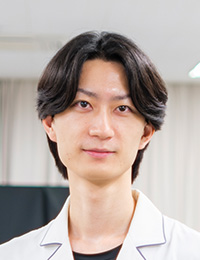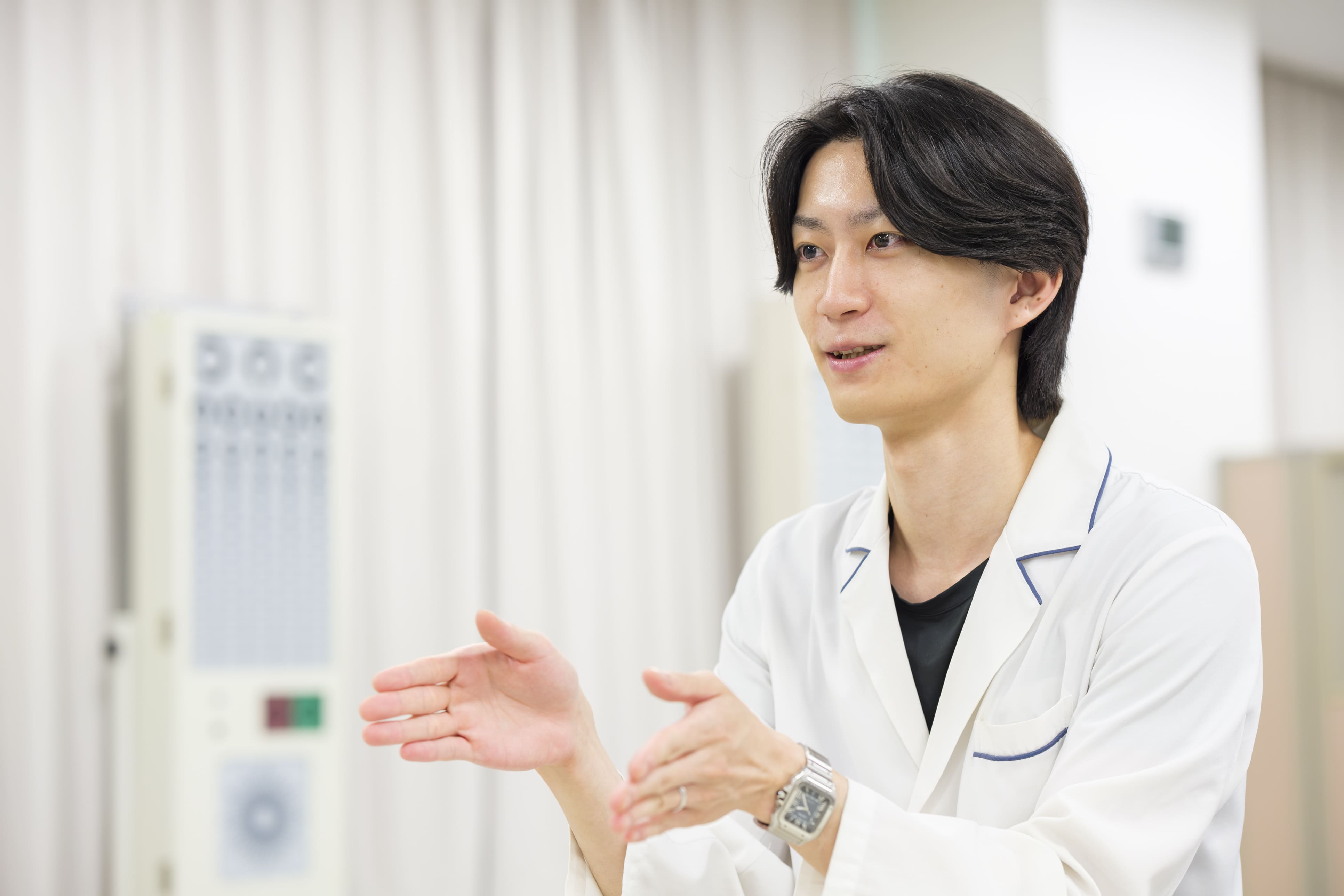


Ryusei Takigawa, Assistant Professor Department of Orthoptics Faculty of Medical Technology, Teikyo University
After graduating from Department of Orthoptics, Faculty of Medical Technology, Teikyo University in 2015, he will proceed to the graduate school of the same Graduate School and complete his doctoral course in 2023. From 2015 to 2023, he will serve as Teaching Associate in Department of Orthoptics, becoming Assistant Professor in 2024. He is particularly active in working to improve aniseikonia.
To summarize this report ...
orthoptist are nationally qualified specialists who perform orthoptic correction for amblyopia and strabismus and test visual function.
Vision refers to the ability to see that humans possess.
It goes without saying that the function of the eye is important in vision, but the function of the brain to process information is also an extremely important factor.
After graduating from Teikyo University, Professor Takigawa obtained a qualification as orthoptist and is currently conducting research into optometry.
The need for orthoptist is growing due to the increase in cases of strabismus, anisometropia, and myopia caused by looking at monitors for long periods of time, as well as the decline in visual function due to aging and the increase in eye diseases such as cataracts.
In particular, vision is directly linked to quality of life (QOL).
One of the SDGs issues is the need to improve the environment surrounding children around the world and the quality of life of the elderly in developed countries.
The presence of orthoptist strive to improve vision will surely increase in the future.
Do you know "vision"?
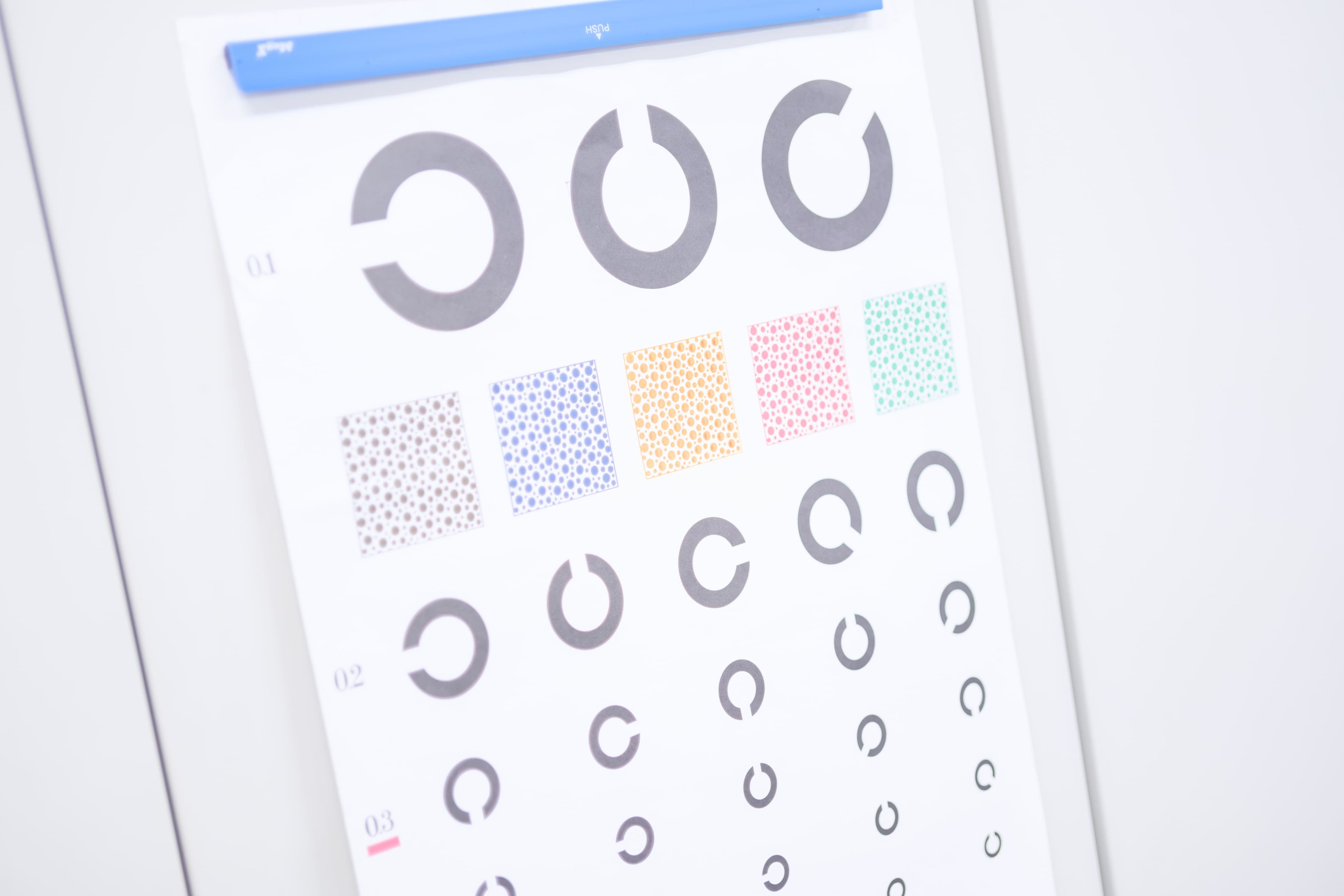
"Optics" is a general term for the functions of the eyes and the brain's function to process information. One type of optics that everyone knows is "seeing = visual acuity," but it is only one of the most representative. There are various abilities such as sensing light, distinguishing colors, and forming an image of what you see. All optics function through the mutual interaction of the eyes and the brain. First, people use their eyes to collect visual information. Next, the information is processed in the visual cortex at the back of the head to recognize what you are looking at. If there is a problem with the brain, there may be differences in recognition even if the function of the eyes is normal. For example, some people have difficulty recognizing three-dimensional objects even if they have excellent eye function, such as good eyesight and balance between both eyes. This occurs because the brain has a weak ability to integrate information. Binocular vision is an easy-to-understand example of optics that involves brain function. Binocular vision is the sensation of the right eye's vision and the left eye's vision being recognized simultaneously in the visual cortex of the occipital lobe. When binocular vision is normal, visual information sent from the left and right eyes is recognized (fused) as a single visual image in the visual cortex of the occipital lobe and separated into color and shape information (static stereopsis) and movement and depth information (dynamic stereopsis). The former information is sent to the temporal lobe to determine "what the object is." The latter information is sent to the parietal lobe to determine "where the object is." Therefore, if there is any obstruction in the pathway from the eyes to the brain, such as strabismus, amblyopia, or visual field abnormality, binocular vision functions such as fusion and stereopsis are impaired. In this way, the eyes and brain work in a closely related manner.
What is orthoptist?
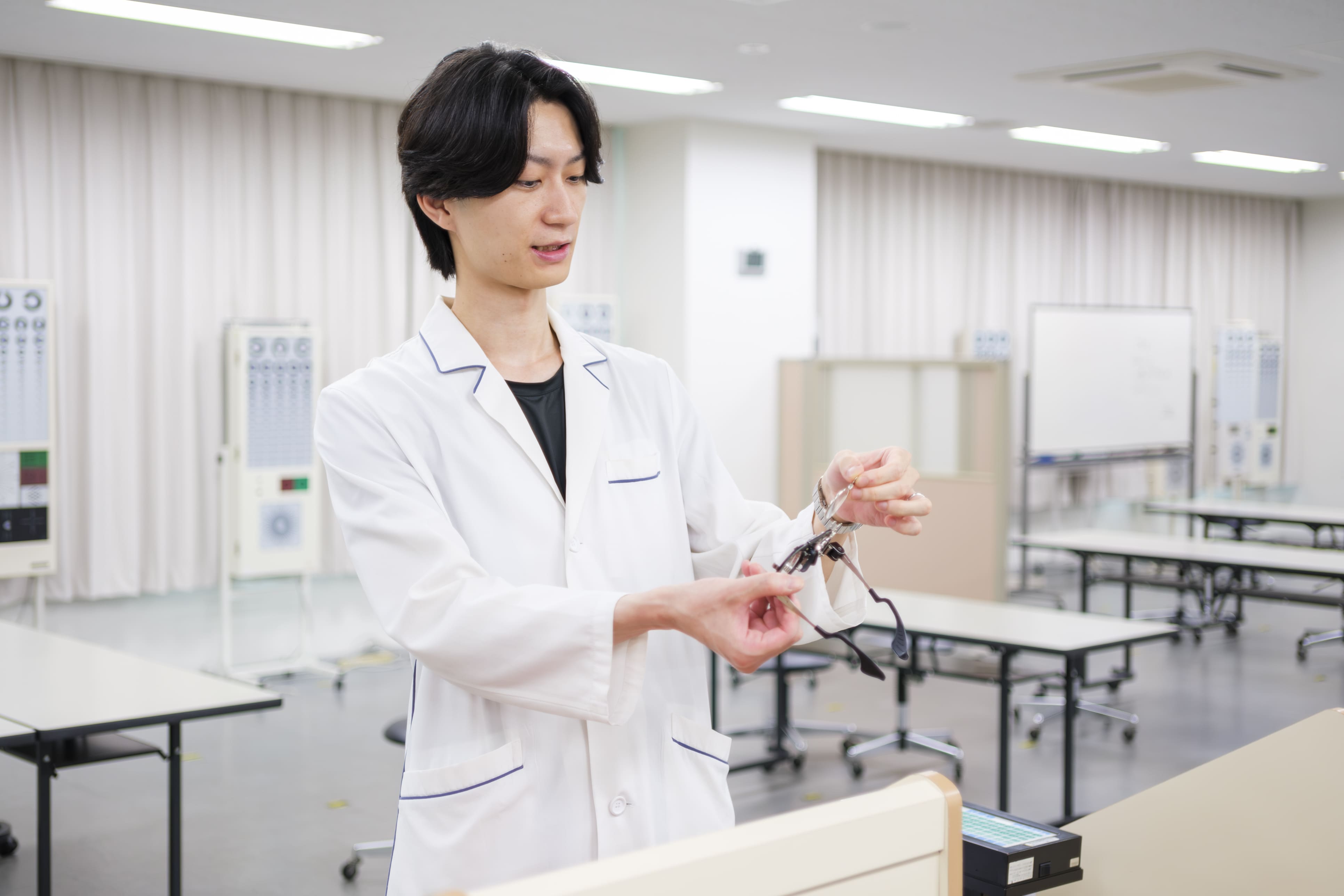
orthoptist are professionals in the field of vision, and are nationally certified specialists who can perform a wide variety of vision tests, including correcting amblyopia and strabismus, as well as visual acuity tests, stereopsis tests, and intraocular pressure tests. I obtained orthoptist qualification 10 years ago after graduating from Teikyo University. However, I found that I did not have enough time to complete my studies in just four years at university. After graduation, I considered working at a university hospital with a view to practical work, but I chose my current position, which allows me to balance teaching and research.
We usually work with Ophthalmology physicians. orthoptist cannot perform medical procedures, so we are responsible for testing and analysis. For example, let's say you have a patient with poor vision. If the patient is simply nearsighted, glasses or contact lenses will help, but if the patient continues to have difficulty seeing for a long period of time or has eye strain, we may examine whether there is another eye disease or a brain problem. Our job is to examine the patient and to develop a remedial process. Today, a variety of treatments for visual acuity have been developed, and testing can lead to appropriate treatment. For example, strabismus, which was once thought to be incurable, can now be corrected by surgery to straighten the angle of the eye. Furthermore, amblyopia, which is often seen in childhood, can now be improved by blocking the eye with good vision and training the amblyopic eye. However, if performed for a long period of time, it can lead to vision loss in the healthy eye, so the appropriate time must be determined and the program must be constructed. At university hospitals, it is possible to monitor not only the balance between the two eyes, but also the waveform of the brain's electrical signals, allowing for a more precise assessment of each patient's visual performance. Research on visual acuity is being conducted around the world every day, and advanced information is being updated.
Challenging aniseikonia
Currently, I am focusing on research into "aniseikonia". Generally, it is rare for people to have exactly the same power in their right and left eyes. Everyone has some differences. However, when the refractive powers of the left and right eyes are more than 1.00D apart, or when the size and direction of the image projected in the mind are clearly different due to abnormalities in the function of the eyeballs, it is called aniseikonia. There are various cases, such as when the width of the images coming from each eyeball is different, when they are stretched vertically, or when they are not distorted diagonally. When aniseikonia occurs, it not only increases stress in daily life, and is likely to lead to symptoms such as eye fatigue and headaches, but it can also cause a strong sense of discomfort and dizziness. In our laboratory, we have a lens that artificially creates aniseikonia, but it makes you dizzy and makes you feel dizzy quickly.
There are two reasons why I focus on aniseikonia. One is that with the advent of advanced technology in modern society, there are cases where children already have poor vision balance between their left and right eyes, resulting in aniseikonia, even in childhood. The other is the aging population. Since symptoms can occur in the general public, the role of orthoptist is becoming increasingly important.
QOL in a SDGs society
Vision is directly linked to the quality of life (QOL). Whether congenital or acquired, losing one's sight causes immeasurable inconvenience in daily life and psychological stress. In addition, children have difficulty learning, such as learning to read and write. Patients' conditions vary, and simply conducting appropriate tests and understanding of the situation for each patient can be the first step in improving vision. In addition to cases where the function of the eye is lost, there are also people who have suffered brain damage and whose vision no longer works properly even though there is no problem with the eye function. Some patients gradually lose their field of vision due to optic nerve diseases, and eventually become completely blind. It is also important to first educate patients about what is normal to see, what is abnormal, and how to cure it.
Restoring vision brings great hope to people. This is a fact that remains unchanged all over the world. While the number of children is increasing in developing countries, the aging of society is progressing rapidly in developed countries. Improving vision is essential to improving the quality of life for all people. In a society that achieves the SDGs, the ability to see is surely one of the foundations of everyone's health. As orthoptist I find great satisfaction in contributing to the realization of a healthier society while dealing with various vision-related disorders.