TEIKYO SDGs reportThevalue of the community that supports Kendo
- A structure that works for the SDGs -
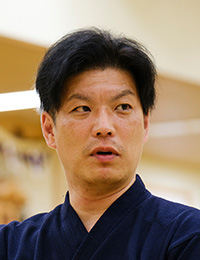
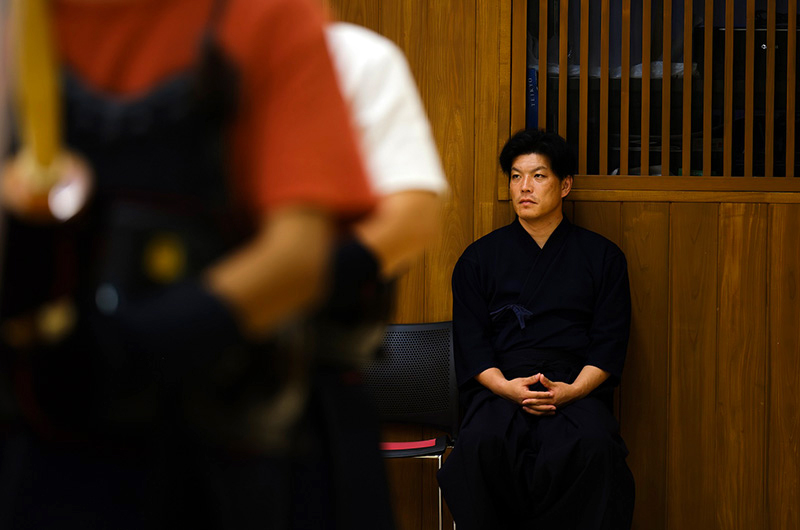
Tetsuya Ozawa, Head Coach Kendo Club
Born in Kanagawa Prefecture. 7th Dan in Kendo. During his high school days, he represented his prefecture and won the National Athletic Meet, among other achievements. He served as captain at Teikyo University. After that, he joined the corporate Kendo Club (Fuji Xerox) before being invited to coach the university's Kendo Club. He is currently a staff member at the university and has been the head coach since 2013.
To summarize this report ...
Kendo ranks are not just about strength; they also require a commitment to exploring the art of kendo through kata, manners, and rituals.
Kendo has a strong community bond, and children of people with experience in kendo tend to take up the sport from an early age.
The community culture remains strong, with people of all ages, from the elderly to children, attending the local dojo. Kendo Club also always stop by the dojo when they return to their hometowns on holidays.
The situation surrounding kendo is tough, with a declining birthrate and an aging population, and the number of participants is decreasing year by year.
In an effort to find new possibilities for kendo, the Teikyo University Kendo Club is taking on various initiatives, such as accepting visits from international students and working to promote kendo overseas.
Kendo, which is filled with the power to pass on culture, can become a new form of content to restore and create local ties.
This may create new possibilities in terms of regional revitalization and regional succession, as required by the SDGs.
What is Kendo?
Many people know that there are ranks in kendo, but few know how to obtain them. Kendo is thought to have started at the same time as Japanese swords, in the Heian period. Over the next few hundred years, it changed through countless wars, and in the peaceful Edo period, it began to emphasize the way of life and other aspects of the mind as a sword that saves lives. As a result, kendo does not only evaluate "strength". It is essential to have excellent skills, but it is also essential to have mastered the kata (form) in demonstrations, and it is even more important that you are mindful of the finer details, such as your manners and etiquette. Only after passing all of these examinations can you obtain a rank.
The promotion exams are held eight times a year, and up to the fifth dan, they are completed through local examinations. For sixth dan and above, the exams become national and are held at one designated location. The location changes every year. I obtained sixth dan at the exam held in Nagoya six years ago. The tension is incredible. You don't know where you're being watched, so you can't let your guard down for even a moment. You are judged on your behavior during and before and after the exam, and in the venue. You must have worked hard for the same number of years as the rank to be eligible to participate in the kendo promotion exam. For example, you can only be eligible to take the third dan exam two years after obtaining second dan. I was sixth dan, so it was five years after obtaining fifth dan. The regulations for sixth dan state that "one who has mastered the essence of kendo and has excellent skills." In order to meet the qualitative items such as essence and mastery, you must devote your energy to everything, including etiquette, awareness, study, and physical training, even in your daily life. In order to challenge for the next rank of 7-dan, I need to continue to work hard for the next 6 years after I reach 6-dan. My seniors have told me that if I fail to get promoted, I will be shocked and will have to repeatedly question myself about the years I have spent, and now I understand this from personal experience.
Kendo and Community
Kendo has the power to build community. For example, many people who start kendo cite family, friends, or other close associates as the reason they started. At the dojo, there are parental mentors and comrades who have shared joys and sorrows for many years. Children who participate are also surrounded by adults, growing up in a strict yet warm environment. The Teikyo University Kendo Club encourages contributions to local dojos, and members visit the dojo when they return home for summer vacation. Practicing at a familiar local dojo is a natural experience for kendo practitioners. At the dojo, university students are respected adults and may even instruct children. They are expected to behave in a way that sets an example. It also provides an opportunity to reexamine their attitude as kendo practitioners and fosters a sense of responsibility for carrying on the dojo community.
The emphasis on etiquette in kendo is meant to provide a sense of security that the advanced skills are handled by disciplined people, and also to build a stable community environment. Younger people have an advantage in terms of strength and physique, but it takes time to continue to pursue a path deeply for a long time and reach a unique state of mind, and there is a way of thinking that can only be reached by people who continue to pursue it over the years. In fact, the number of years required to obtain a kendo rank is an indication of this. There is a deep meaning behind the fact that ranks are evaluated based on etiquette, not technique.
Nurturing new leaders
Currently, due to the trend of a declining birthrate and an aging population, the number of kendo practitioners is steadily decreasing. We are also concerned about this situation, and it is often brought up as an issue at federations and other organizations. Of course, there is also the idea of turning kendo into a sport to increase the number of participants. However, due to the nature of kendo, as symbolized by the promotion examination, doubts remain as to whether it can quickly become a sport that everyone can enjoy. I have heard that the word "sport" originally comes from the Latin word for "diversion." This is clearly different from the background of the birth of kendo, which started out as a deadly sword.
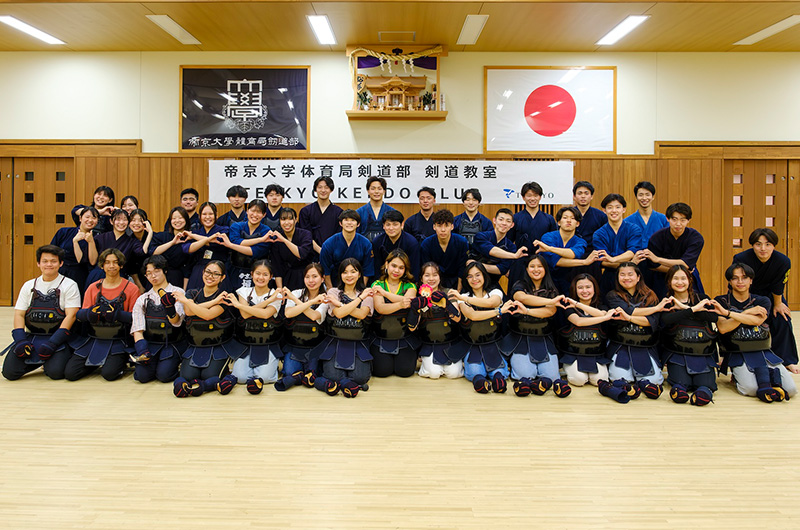
However, we cannot afford to sit idly by. At Teikyo University's Kendo Club, we are undertaking several experimental initiatives. First, we are accepting new members with limited kendo experience. As the university's designated training club, Kendo Club attracts members who are close to professional athletes, primarily consisting of players who have achieved success in national and other competitions. However, we fear that this alone could lead to an emphasis on skill alone and a tendency to think that strength is all that matters. Therefore, we are striving to preserve the culture of club activities as a dojo community. We believe that even inexperienced members are part of Kendo Club, and that it is important to create an environment that promotes the preservation of Kendo and a renewed appreciation of its etiquette through instruction. We are also implementing student-led programs for field trips and training camps. These include selecting opponents for matches and deciding on training camp locations. By thinking and engaging independently, students gain an understanding of the local community, grasp the abilities of their opponents, gain insight into the kendo community, and acquire good etiquette. Recently, when we planned a Kyushu expedition training camp, we received cooperation from many people in the kendo community, including parents related to members from Kyushu. Of course, as a designated training club, we are expected to achieve results in competitions. This was the perfect opportunity to feel firsthand the power of kendo as a community, which is necessary for that.
The Potential of Kendo
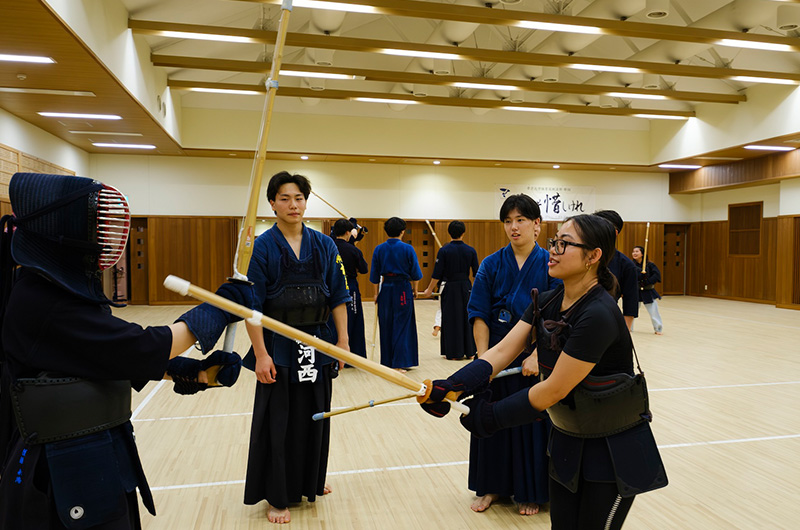
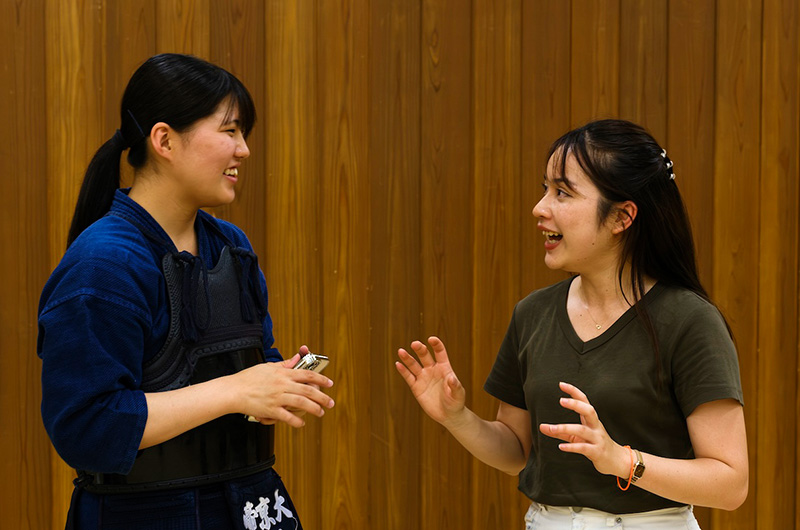
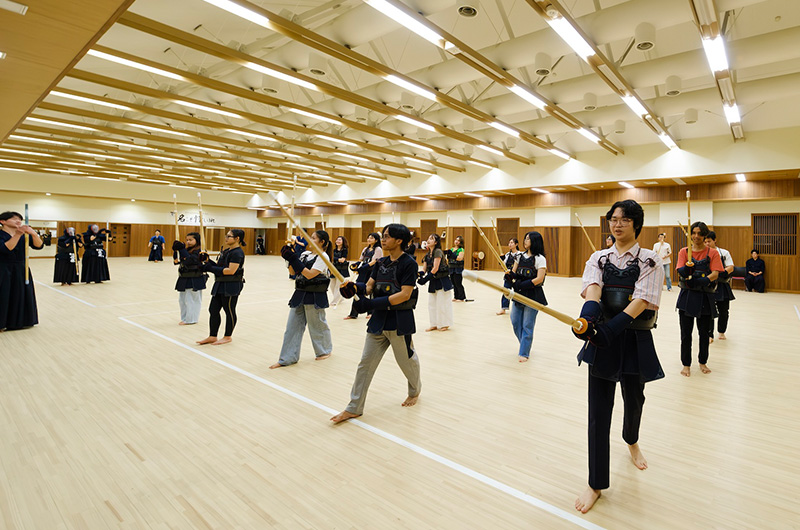
We are also focusing on projects related to foreigners. One of them is a trial class for international students. International students who have never touched or seen kendo equipment are given the opportunity to experience etiquette, practice, and competition. It has been several years since it started, and the event has become one in which about 15 to 20 international students participate each time. The members of the club who have little kendo experience are the ones who play an active role. In the tense club activities every day, they take kendo seriously and receive instruction while thinking about how to become stronger, so they are able to lecture from a perspective that is closer to that of beginners.
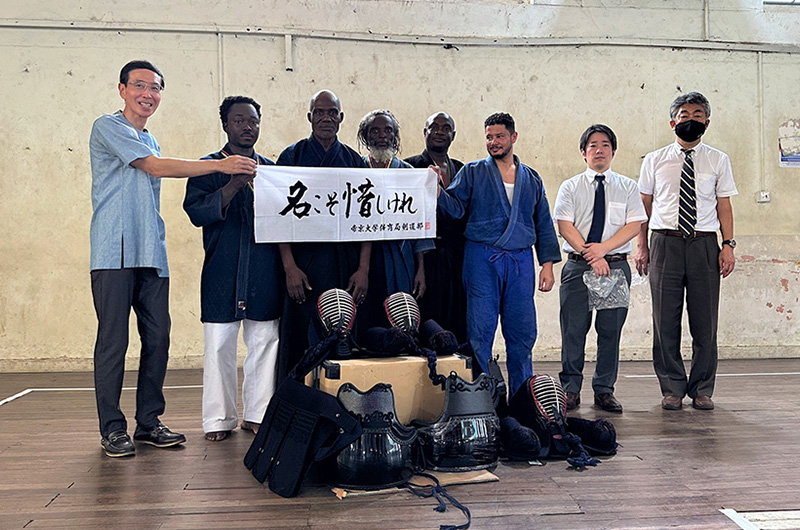
The other initiative is the provision of kendo equipment in Ghana. Located in West Africa, the Republic of Ghana has been a vibrant kendo destination since 2013, when Ambassador Kaoru Yoshimura opened a kendo class there. However, Ghanaian kendo practitioners have reported problems such as a chronic shortage of protective gear and the inability to repair broken equipment. In December 2021, a message from Teikyo University Chairman and President Yoshihito Okinaga about "Teikyo University's goal of internationalization" served as a major catalyst, leading to the donation of kendo equipment by Kendo Club and volunteers from the university's faculty and staff. The relationship has continued ever since.
I now feel anew the potential of kendo in achieving the SDGs through these activities. First of all, kendo combines martial arts elements such as self-defense, technical elements such as hosting tournaments to test the skills of many people, and a social element such as fostering a community culture in the dojo, all of which contribute to the stability of local communities. Furthermore, the health of local communities is an important theme in all countries, developed and developing alike, and there is potential for the recognition that the community-oriented structure of kendo is valuable worldwide to spread. Rather than simply increasing the number of competitive participants, achieving the goals of solving global issues and increasing the number of people involved in kendo would be of great value for kendo, which emphasizes mindfulness. The Teikyo University Kendo Club will continue to promote the global participation of kendo competitors while pursuing the universal values of kendo and exploring new ways to popularize the sport.