- Health of society as indicated by children's health -
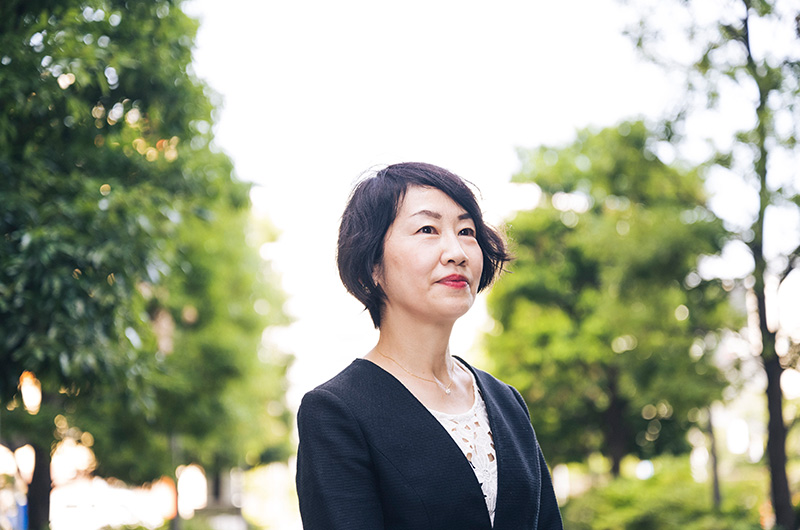
Yuko Miki, Associate Professor Department of Nursing Faculty of Medical Technology, Teikyo University
Graduated from St. Luke's College of Nursing in 1991 with a Department of Nursing degree in nursing. After working as a hospital nurse, she completed a master's program at the University of Tokyo Graduate School Graduate School of Medicine in 1995 and a doctoral program at the same graduate school in 1998. After serving as a nurse Assistant Manager in the Nursing Division of the Health Policy Bureau of the Ministry of Health and Welfare for two years, she has been active in various fields, including part-time Senior Assistant Professor at the University of Notre Dame, specially appointed researcher at the Center for International Cooperation in Medical Education at the University of Tokyo, Senior Assistant Professor at Tokyo Ariake Medical University, and part-time Senior Assistant Professor in the field of community health nursing at the Graduate School Graduate School of Health and Hygiene Sciences, Tokyo Medical and Dental University. He was assigned to Teikyo University in 2018.
To summarize this report ...
“Health” is an important theme in the SDGs. Health has a tremendous impact on the sustainability of people and societies.
In particular, by analyzing the living environment of "children," we can see how "health" should be in society.
Currently, I am analyzing how the environment, perceptions, and behaviors of people living in society are intertwined and affect children's health under three themes.
The first is the state of health for families living on high-rise floors.
The second is the development of teaching materials for cancer education in elementary schools.
The third is integrated collaborative support for people with developmental disabilities.
Careful analysis of the elements that make up health will lead to behavioral changes that will lead to the realization of a healthy society.
Protecting the health of people who will be responsible for the future can contribute to the realization of the SDGs.
Research on children's health
As a new nurse, I was assigned to the pediatric Surgery. After three years, a senior nurse advised me that if I wanted to continue specializing in Pediatrics, I would gain more experience in adult wards, which would allow me to deepen my nursing knowledge. So, I transferred to Surgery. I subsequently realized that I wanted to work in pediatrics in the future. I also realized that it was important to care for not only children but also their parents (adults). I also believed that by treating patients as a group, not just as a disease but as people living in the community, I could gain a multifaceted understanding of the target population and provide effective support. Graduate School to Graduate School in the Department of Maternal and Child Health (now Developmental Medicine). There, I studied social "health," which can be seen through analyzing children's living environments. A healthy environment for children is often also healthy for parents and those around them. Since then, my research focuses on analyzing, proposing, and planning actions for social health, with a focus on children.
I am currently researching three themes. 1. High-rise condominiums and parent-child health, 2. Development of tailor-made cancer education materials for cancer education in elementary schools, and 3. Integrated support for children with developmental disabilities and their parents. Children's health is the common denominator.
mother and child and living environment
My first research project, the relationship between living environments and parent-child health, is something I've been continuing since Graduate School days. My focus has been particularly on high-rise apartment buildings, which coincided with the full-scale trend toward higher-rise residential buildings in the late 1990s. Research findings at the time revealed that mothers and children living on higher floors tended to go out less, and that the increased time spent at home by both mother and child led to delays in the development of independent daily habits in young children (such as delays in putting on and taking off clothes and shoes) and poorer mental health among mothers. Furthermore, many families are concerned about noise (especially children's voices and footsteps), and while good neighborhood relationships reduce the anxiety of families making noise and the dissatisfaction of families listening to noise, the opposite tends to increase stress for both parties.
More than 20 years have passed since then, and the environment surrounding children has changed significantly, such as the increase in skyscraper housing. However, past research results have already been proposed through papers, academic conferences, mass media, etc. In recent years, the number of working women has increased, and children are spending more time in nursery schools and kindergartens, and the living environment in high-rise households has changed, there are fewer problems in the past. On the other hand, however, new issues have surfaced, such as how to deal with disasters in super high-rise housing of 20 stories or more and how to ensure safety when returning home. For example, in the event of a disaster at night, whether mothers and children can evacuate from high-rise buildings using narrow evacuation ladders on balconies, or how elderly people will be evacuated, are unknown. Anxiety of consumers influences good or bad health. Therefore, we are working on the construction of a disaster response handbook for super high-rise housing. Such urban life and maternal and child health are common issues throughout the world where urbanization is progressing. In this changing era, I feel the need for constant research on the living environment of children.
Elementary school students and cancer education
The second theme is improving cancer education in elementary schools. While I have worked with children with cancer, I have rarely worked with children and their families who have a parent with cancer. When I was appointed to Teikyo University, I learned about the Koala Cafe and had the opportunity to interact with children and For parents and guardians who had learned of their parent's cancer. The Koala Cafe is a Teikyo University initiative whose vision is to provide a safe and comfortable space for children with a parent or loved one with cancer, providing them with time to be themselves, away from their daily routines. Since 2019, we have been developing tailored cancer education materials here. Current cancer education focuses on tobacco and alcohol as the cause of cancer. While this is certainly true, many cancer patients have no connection to tobacco or alcohol. However, they are often lumped together in society, causing many discomfort. Children whose parents have cancer are particularly vulnerable to being perceived as having a specific parent. It is important to promote accurate cancer education at the elementary and junior high school level, eliminate prejudice against cancer, and improve the social environment.
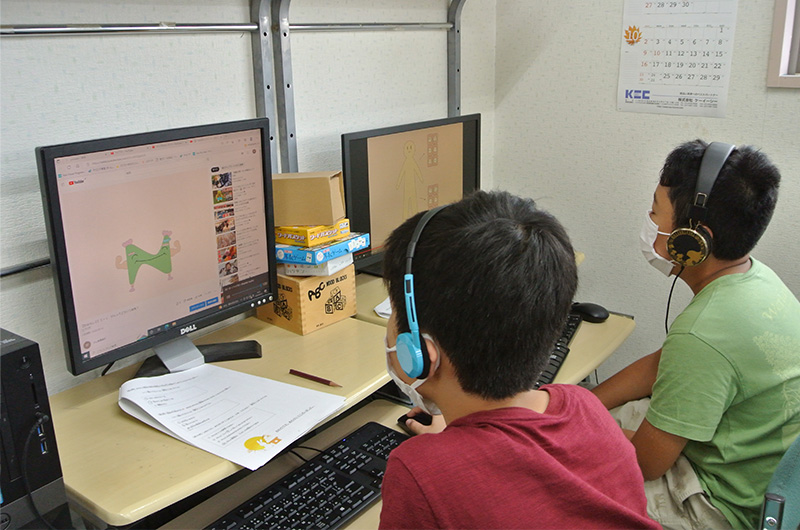
However, while cancer education is explicitly mentioned in the curriculum guidelines for junior high and high schools, it is not included in elementary schools. While some municipalities, such as Toshima Ward in Tokyo, are focusing on cancer education, the current implementation of cancer education seems to vary from elementary school to elementary school. Another issue is the difficulty of arranging external Senior Assistant Professor such as doctors, nurses, and specialists, to serve as cancer educators. Therefore, we have created educational materials and made them available free of charge on the Koala Cafe website. These materials can be used anytime, anywhere, and by students of all ages to learn accurate information about cancer. We have created three types of videos tailored to the home environments of adults and children: "Elementary school students whose parents are undergoing or have completed cancer treatment," "Elementary school students whose parents have lost a parent to cancer," and "Elementary school students whose parents have never undergone cancer treatment." While there are still many challenges in development, we hope that spreading accurate awareness of cancer throughout society will significantly reduce the psychological burden on cancer patients and their families.
Developmental disorders and social environment
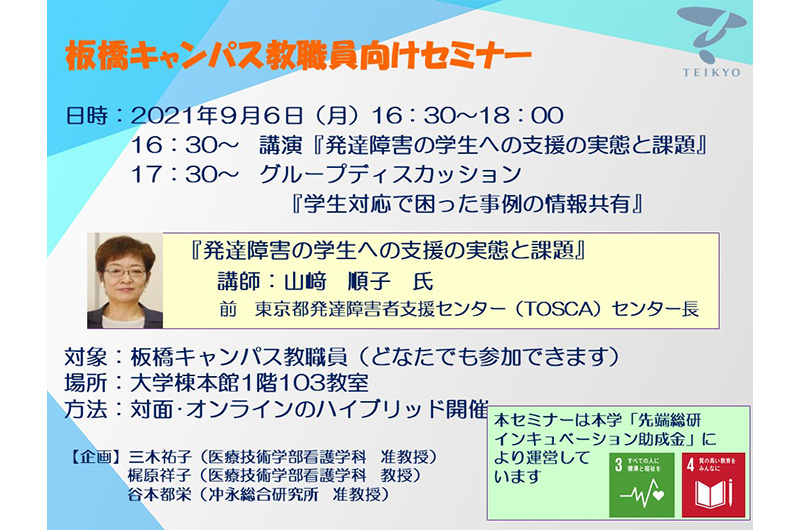
The third is research on the environment surrounding children with developmental disabilities. The timing at which developmental disorders can be detected varies. Disabilities can be seen in childhood, adolescence, or refusal to go to school, and there are many cases in which a person becomes aware of their disability after becoming an adult, such as a university student. When interacting with people with developmental disabilities, which is not obvious at first glance, the response changes greatly depending on whether or not there is knowledge. In fact, I have heard that there have been cases at our university that have struggled to deal with students who are thought to have developmental problems. Therefore, last year, we held a seminar for faculty and staff at the university to share correct knowledge and support for people with developmental disabilities. .
We believe that similar efforts are necessary in various regions. In the case of the community, it is important to understand and respect the specialties and backgrounds of each other's professions with people in various positions such as doctors and public health nurses and other professionals in medical care, childcare, education, welfare, psychology, etc. It is to realize integrated collaborative support so that information can be shared and roles can be fulfilled. This will not only give children with developmental disabilities and their parents a sense of security, but it will also contribute greatly to raising the awareness of society as a whole. Therefore, we are exploring the construction of a multi-professional joint regional support network that makes use of ICT and can be accessed from home. Realizing a safe daily life for children with developmental disabilities also improves the safety and security of the entire community.
“Nursing” the health of society
"Health" is at the root of the three studies I have talked about so far. Even in the SDGs, items for building a "healthy society" extend to the base of society. Health is not just the absence of disease, it is made up of many complex factors. A stable living environment is essential to keep your family healthy. Safety, income, educational environment, convenience, social stability, and individual work must be fulfilled. The surrounding living environment, social awareness, and local support systems are also important. For example, I'm sure you all research whether there are medical institutions near your condominium. It may be an afterthought. In conflict zones, where risks have been increasing in recent years, it is difficult to even maintain safety in the first place. It is extremely important to be able to live safely and securely. Our research is, so to speak, about caring for health in society. We believe that developing the necessary environment for this can be a common theme for the world to achieve the goals set out in the SDGs.