TEIKYO SDGs reportA New Form of Capitalism Driven by Students
――Possibility of a corporation that metabolizes in 2 years ――
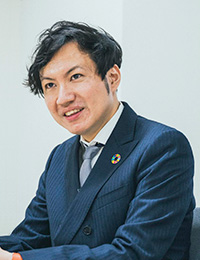
Kohei Mikata, Senior Assistant Professor Department of Business Administration Faculty of Economics Teikyo University
Completed his doctoral studies at the Kobe Graduate School School Graduate School of Economics in 2015. He is well-versed in Chinese social economy, focusing on innovation theory, economic systems theory, and econometrics. After serving as a researcher at the Kobe Graduate School of Graduate School of Economics (where he currently works) and a part-time Senior Assistant Professor at the Kobe University Faculty of Economics, he became Assistant Professor in Department of Business Administration Faculty of Economics, Teikyo University in 2016. In 2019, he became a full-time Senior Assistant Professor in the same department and faculty. He is currently engaged in research on the Chinese economy, the social implementation of innovation, regional revitalization through Industry-Academia-Government Collaboration projects, university-based ventures, and new approaches to entrepreneurship education.
To summarize this report ...
In Industry-Academia-Government Collaboration projects, it is essential to not only raise funds but also maintain the motivation of the people involved.
The pure enthusiasm of the students creates a small emotion and has the effect of motivating the project.
An Industry-Academia-Government Collaboration project involving Joso City, ALSOK, and Teikyo University has been adopted, and at the same time, Sankei Seminar is backing the launch of a corporation run primarily by seminar graduates.
Basically, it is a corporation composed of students, and it envisions an extremely unique corporate form in which people are forcibly replaced in two years.
The corporate theme is inheritance and update of "ism". If the businesses, products, and human resources born from this can continue to provide new motivation to society, we can contribute to the realization of a sustainable society as stated by the SDGs.
Motivation mediated by "students"
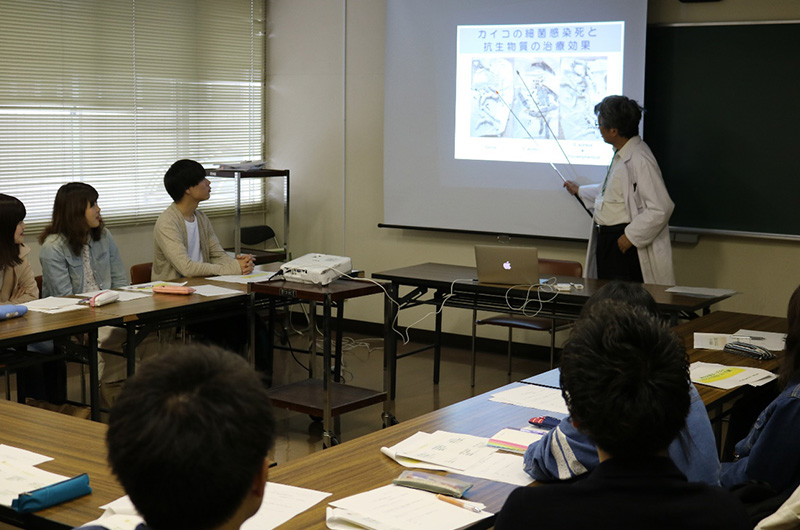
Every year, students from Faculty of Economics visit the Medical Mycology Research Center to receive lectures from Professor Sekimizu and continue to interact with him (the photo shows the project in 2017, when it began).
My seminar is currently working on the "Teikyo University Yogurt Project," a research project aimed at regional revitalization. This project explores new approaches to venture education through participation in a Industry-Academia-Government Collaboration project aimed at developing new products as a means of socially implementing innovation. In particular, my encounter with Professor Kazuhisa Sekimizu, Director Teikyo University Institute of Medical Mycology in 2017 is essential to discussing this project. While conducting research at the University of Tokyo in 2012, Professor Sekimizu discovered "11/19-B1 Lactic Acid Bacteria," a new type of lactic acid bacteria that has a stronger immune activation effect than conventional lactic acid bacteria ("immune" here refers to natural immunity). After the Great East Japan Earthquake, he promoted a disaster recovery project in collaboration with a dairy company in Fukushima Prefecture. Professor Sekimizu also possesses several other powerful lactic acid bacteria. In collaboration with Professor Nakanishi Hotaka, Director of Teikyo Technology Transfer Center, the seminar has begun developing a new product from the university that utilizes Professor Sekisui's lactic acid bacteria, focusing on providing a challenge and Practical learning opportunity for the students.
In 2018, our seminar began building a sales network within the university, which also served as research for launching a business. In 2019, with the aim of revitalizing the local community and promoting agriculture in Joso City, Ibaraki Prefecture, we utilized the "Private Proposal System" with ALSOK, a security company that supported our seminar activities, to propose the development of a product combining lactic acid bacteria technology with Joso City vegetables. This proposal was accepted. We are currently working to build a sustainable business centered on this project. Industry-Academia-Government Collaboration has become widely recognized, but it is not easy to achieve. Especially in rural areas, while temporary corporate or national funding is readily available, economic fluctuations often lead to companies withdrawing, or projects terminating when national subsidies or grants expire. At the same time, maintaining ongoing motivation and securing the necessary human resources is crucial for those involved in the project to truly commercialize it. I see students as a potential solution to this challenge.
A corporation that metabolizes in 2 years
For example, in an Industry-Academia-Government Collaboration project with Joso City, ALSOK representatives and seminar students made numerous on-site visits to conduct interviews to prepare a business proposal. With each visit, various people showed up to help the students and provided new information. We witnessed a shift in the overall awareness of the project. The students' genuine enthusiasm spread to various people, resulting in co-creation. Two seminar students also played a central role in creating the materials used in the final presentation and participated in the presentation. Ultimately, the proposal adopted by the judging committee was to create a new business for regional revitalization, including a collaboration with ALSOK to develop local specialty products (such as pickles) that combine Joso City's local resources, such as non-standard vegetables, with lactic acid bacteria. This not only boosted the students' confidence, but also provided a valuable experience that allowed them to experience firsthand the significance of students' roles in Industry-Academia-Government Collaboration.
Based on these results, this seminar will be held at L Co., Ltd., which was established by Visiting Professor Nobukazu Sekisui of Department of Business Administration Faculty of Economics, at our university. We are preparing to take over ABiT in a way that is centered around our students. Students are limited to two years in the seminar. This means that this organization has an extremely unique cycle in which personnel change every two years as a natural phenomenon. The key is the preservation of the "ism." In this seminar, some highly motivated individuals spontaneously push forward with projects with "fervor." Students who were not particularly motivated at the start of the seminar see their peers' fierce dedication to the project. Gradually, their enthusiasm spreads as "small emotions." This small emotion, unmediated by adults, acts as a "catalyst" to gradually unite the hearts of the seminar students, creating a culture/ism. Some people prefer strictness, while others do not. However, these "small emotions" are an essence that resonates with everyone and are the driving force behind the project. After completing this program, students go on to work at various companies. It is crucial that the accumulated "ism" is passed on and updated by the new forces that change every two years.
A platform for discovering possibilities
Currently, the center of projects and corporations is from this seminar, a woman who just graduated from our university in 2019. He was a leader in the project that started in 2017.
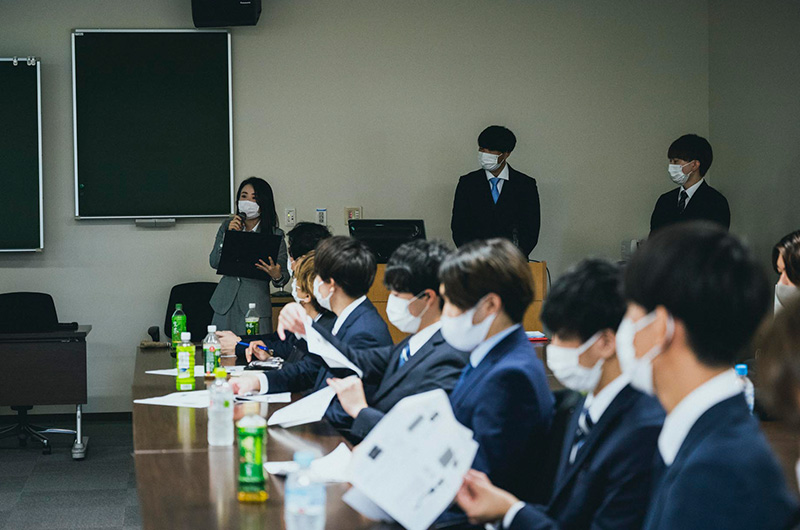
Graduates and current students Faculty of Economics give a presentation on the "Teikyo University Yogurt Project" (2020)
We chose a graduate rather than a student as the representative because we felt it was necessary to achieve a holistic approach to management. Whether this system will work is a matter of research, and if it doesn't, we'll just acknowledge that it didn't work. My role is to create many opportunities for this organization. Product development requires not only technical and business knowledge, but also knowledge of, for example, packaging design. Regarding design, Junichi Owaki, a cutting-edge designer and representative of OJAR First-Class Architects (and part-time Senior Assistant Professor at Kyoto University of the Arts), has been working with students to oversee the design since the project began. With the help of various collaborators, my mission is to motivate students, just as they motivate the community. In this way, a practical and Practical learning venture education "place" has been created, with each role tailored to each individual.
Our university, which upholds Practical learning as Educational Guidelines, sees this type of venture education "place" as a "living teaching material" and is very strongly supporting it. However, the university as a corporation does not participate in management. Their activities are mainly behind-the-scenes support, such as proposing business models and package designs, and promoting Industry-Academia-Government Collaboration. For example, they are considering establishing a cooperative system to sell commercialized yogurt and pickles in the campus store and providing them in the cafeteria. We hope that students will make full use of this environment to hone their skills. We hope that students who experience “One’s way” education at Teikyo University will aim to become individuals who can overcome various challenges on their own when they enter society.
Steps to the other side of capitalism
From the perspective of the SDGs, modern society is forced to face huge social issues such as climate change and widening the gap between rich and poor due to the abuse of global resources as a result of the rise of capitalism. The protagonist of capitalism is the corporation. The search for the establishment of a corporation with a new idea is the search for the possibility of opening up the next era of capitalism. What is the value of a unique system in which all staff are students and are forced to be replaced every two years? Also, does that lead to the development of a sustainable methodology as a new corporation? I'm not exhausted. Nevertheless, the existence of a corporation that accepts and enhances the potential of individuals contributes to solving multiple issues set forth by the SDGs. As I have talked about, there are not many universities in Japan that try unique student-centered venture education, and from Teikyo University, a new venture that commercializes the solution of social issues itself is introduced to society. If you can make suggestions, you will be able to commit to more SDGs goals.
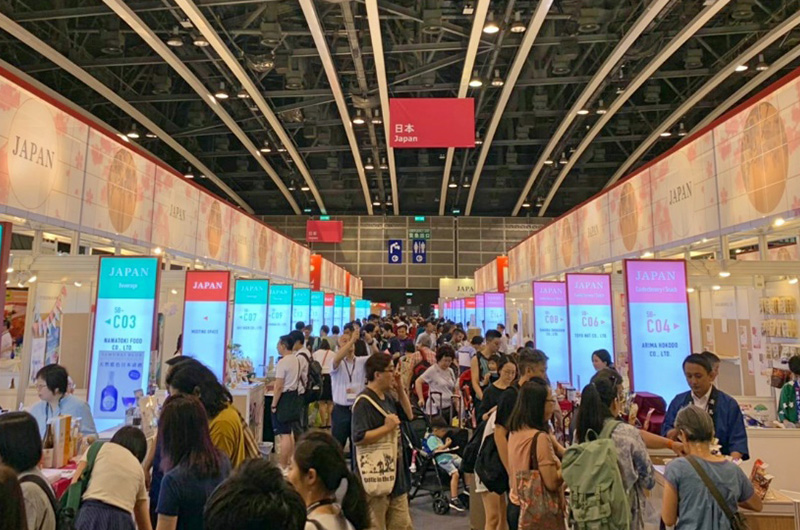
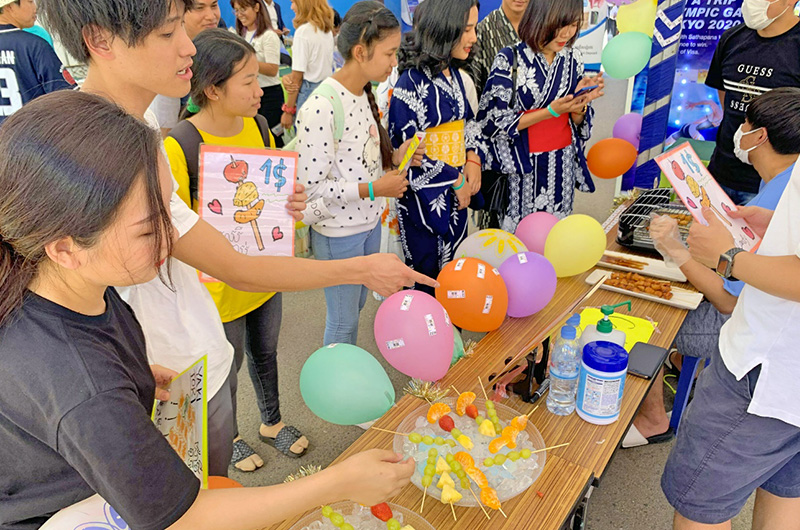
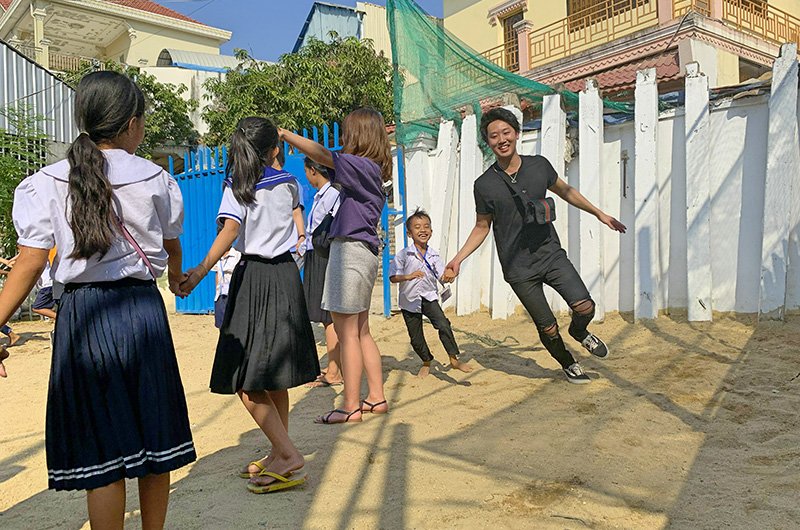
To promote our activities internationally, we sent students to a booth at the Hong Kong Food Expo, the world's largest food trade fair, held in Hong Kong in 2019. In 2020, a volunteer team of third- and fourth-year students from our seminar participated in the Kizuna Festival held at the Royal University of Phnom Penh. We plan to continue to expand and promote projects like this internationally. At the same time, we are also deepening our discussions about how we can contribute to supporting developing countries, including Cambodia. I don't know what students will discover in the future. To begin with, students have a wealth of options. They should broaden their horizons, freely explore possibilities, create small, moving experiences with passion, and accumulate rich experiences. I hope that, as we promote several Industry-Academia-Government Collaboration projects, Teikyo University will continue to produce talented individuals who can inspire and inspire more people and contribute to society, thereby contributing to the sustainable development of society.
The Japan booth at the Hong Kong Food Expo, where students from Faculty of Economics were sent (2019)
Third and fourth year students from Faculty of Economics participated in the Kizuna Festival held at the Royal University of Phnom Penh to learn about product planning, development, and sales. They sold yakitori and fruit skewers that they created after interviewing Cambodian people and researching their taste preferences (2020).
Third and fourth year students from the Faculty of Faculty of Economics bought gifts with the profits from selling food at the Kizuna Festival stalls and brought them to play with children from the Cambodia Ai Center (a free school that supports Cambodian children who cannot attend school due to financial circumstances).
<The origin of the name LABiT Inc.> The company name is an abbreviation of Lactic Acid Bacteria Innovation by Teikyo. Literally translated, it means "Innovation using lactic acid bacteria by Teikyo University." Based on the powerful lactic acid bacteria technology of Professor Sekimizu Kazuhisa, Head of Center, the name expresses the desire to implement the knowledge of Teikyo University in a cross-disciplinary and organic manner for social implementation. LABiT was founded based on this technology and was headed by Visiting Professor Sekimizu Nobukazu of Department of Business Administration Faculty of Economics at the university. Taking over from this, the company has now grown into a student-led operation, with Visiting Professor Sekimizu Nobukazu continuing to provide guidance.