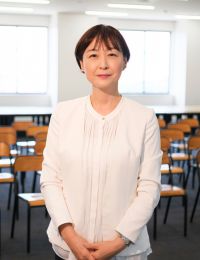
Associate Professor Lee Young-sook, Department of Sociology Faculty of Liberal Arts Teikyo University
2007 Osaka University Graduate School Doctor of Human Sciences, Ph. D. (Human Sciences). After working as a volunteer coordinator at the University Volunteer Center and as a specially appointed researcher at an American non-profit organization (food bank), she has been at Teikyo University Faculty of Liberal Arts Department of Sociology Associate Professor since 2019. She researches the impact of relationships from the areas of volunteerism, social business, Community Engagement and career development, and active learning.
To summarize this report ...
Professor Li is researching collective impact in volunteering and social business.
Collective Impact is a network of community members and organizations that learn and work together to address structural social inequalities and bring about group and system-level change.
In situations where support is needed, asymmetric relationships tend to develop due to social positions and structures.
When such relationships remain fixed, structural inequalities remain and it becomes difficult to bring about fundamental change.
Disinterested volunteers can act based on goodwill and causes that transcend the asymmetry of relationships, and thus can bring flexibility and diversity to society.
For example, hospital society can easily become rigid if there is only an asymmetrical relationship between doctors who help and patients who are helped, but volunteers can take initiatives to change this situation flexibly and form networks that allow various stakeholders to work together.
This type of practice and its significance are also being said about the SDGs.
Among all the goals and indicators of the SDGs, the structure in which many volunteers are active and a variety of social businesses are created holds great value and potential.
Bedside teaching in a pediatric cancer ward
After graduating from university, I found employment, but was forced to quit soon after due to family circumstances. I then found work as an administrative assistant at a local national university hospital, working as a secretary in Pediatrics. Decades ago, the hospital was still in the early stages of capital investment and development. While I spent my days commuting between the research and ward buildings and performing various miscellaneous tasks, my boss asked me if I would like to do bedside teaching for hospitalized children in the pediatric ward. The pediatric ward housed many pediatric cancer patients. Because of the long hospital stays, the hospital was one of the first in Japan to offer in-hospital classes, but this did not cover children outside of compulsory education. The hospital was also unable to address the issue of what would happen to children going on to high school or university. The environment for preschool children was also underdeveloped. There was a playroom, but no one was there to create a play space. As a hospital, treatment naturally took priority. However, after patients were discharged, they returned to their normal lives and communities. Hearing stories of patients who were able to leave the hospital but had a difficult time returning to school left me with mixed emotions. The side effects of the harsh treatments can significantly change their appearance and weaken their physical strength. The road to a state of remission (a state considered cured) is long, and the possibility of relapse is always close at hand. Furthermore, their long hospital stays in closed wards meant they lost the experience of interacting with a variety of people. Furthermore, there were a variety of complex issues intertwined that could not be resolved simply by curing the disease, such as the suffering of siblings and family members who had endured in the shadows.
While interacting with children, families, and medical professionals on the wards, I began to think that opportunities for people who are neither patients nor medical professionals to volunteer and interact with patients are extremely valuable and important. I also realized that if you think of the hospital as a society, you can see the dynamism that arises when people from diverse backgrounds interact with each other. In particular, the position of volunteer does not belong to any particular group, and has a high degree of freedom within the system of hospital society. This is why there are things that can be done. I saw potential in this situation and focused on the importance of changing the environment. So I decided to go on to Graduate School while working at the hospital, opening the door to the research that I continue to pursue today.
What volunteers can do
One of the volunteer activities I did at the pediatric cancer ward of a university hospital was to visit children in costume to celebrate their birthdays. I thought I should start with the formality, so I wore a costume. One day, the mother of a child who had been kept in a private room for a long time due to a transplant asked me for advice, saying, "It's my birthday, and it's so lonely for mother and child to be alone. Can you plan something fun for me?" With the simple idea that "birthday = celebration," we decided to go and celebrate with volunteers! However, we thought that just saying congratulations would be boring, so we visited the hospital rooms in costumes of our own liking, such as Hello Kitty headgear or Chinese dresses, sang congratulatory songs, and gave handmade cards. It was just that, but I was surprised at how happy the children were. Word spread quickly in the small "ward community," and we started receiving more and more requests from children and their mothers. Then, changes started to occur. For example, children waiting on the bed started wearing princess costumes. The doctors and nurses were wary at first, but before we knew it, they were dressing up in whatever costumes they wanted and having fun with us. Even though they usually like to have fun, their professional status in the hospital doesn't allow them to "dress up in costumes at the hospital." However, because our birthday party was purely a volunteer activity, they didn't need to be too tied up in professional ethics, and it became a noble cause that allowed them to focus solely on entertaining the patients.
These activities were made possible thanks to the university student volunteers who joined us. The volunteer team grew to a maximum of 60 people, and various roles were created. Some people made the game tools by hand every time, and others were absorbed in the preparations. By sharing within the team that indirect volunteer activities are also important in addition to direct volunteer activities, people who can shine in various roles were born. In addition, we held a takoyaki party once a month and a calligraphy competition on New Year's Day. Doctors participated, saying, "We're a bit of a calligrapher." Patients' attitudes also became brighter and brighter. Currently, I am focusing on the concept of Collective Impact and conducting research and practice, but I feel a strong sympathy for it because I was involved in such activities before I even knew the concept.
Filling the asymmetrical gap
In the field of support, it is easy for an asymmetric relationship to be formed between those providing support and those receiving support. In particular, in the medical and welfare fields, the relationship of helping and being helped tends to become fixed. My research theme is how to flatten this and make it more flexible. It is now becoming clear that when volunteers and social businesses are incorporated into such structures, the structure becomes more flexible. By introducing new ideas and initiatives to existing values and methods, the preconceptions that "things have to be a certain way" that have permeated the community disappear. This is where I believe the value of volunteers and social businesses in solving structural problems lies.
Currently, I am trying various things in my seminar. For example, my seminar students are working on forum theater. It is necessary to understand various assumptions in society, but in real society, stories continue in an unpredictable state. And since there are countless stakeholders in society, it is not enough to only see things from your own perspective. So, I started an attempt to "understand understanding others" using the theatrical format of "playing others". First, I ask students to reenact "unpleasant episodes" that they have experienced as skits. Other students who watch the skits bring the actions that come to mind, such as "I would do this" or "What would happen if it unfolded like this," into the original play as "actors," and the students who act are replaced one after another. Then, while acting and watching, they find the differences between the character and themselves, and have an opportunity to think about what they could have done or what conversations they could have had. In other words, it becomes training to feel others. In fact, volunteers are always in that position. Face the discomfort of others who are different from you, and try to understand and empathize. Then, try to understand and empathize with the field that you don't know about or thought to be unrelated to you. I believe that you can learn this perspective through Forum Theater. In the actual field, you will further think about what is required of you, put it into practice, and check the reactions of others to your practice. In the classes I teach, I introduce active learning in the form of repeating this process in my practical classes (social business training).
A bridge between society
There are various colors for the SDGs, and in my volunteer theory classes, I ask students about the color they associate with volunteering. In the first class, everyone tends to say orange or pink. However, the color changes with each class, and in the end, many students say that the color is black, which is a mixture of various colors, and many students say that the color is white, which is dyed in many colors. Some students say that the color is extremely colorful, like a hologram. Students who only had the image of volunteering as warmth, kindness, and helping others have come to see volunteering from multiple perspectives through classes, from the perspectives of "self," "others," and "society," and further discover various "colors of volunteering" by considering the points where these intersect. In addition to the potential of volunteering, they are learning about the structure in which volunteering is requested and volunteer activities are established, and the relationships between people involved in volunteering. There are countless ethnic groups and tribes with different historical backgrounds in nearly 200 countries, and they coexist while facing different environments in each region. Furthermore, since this is such a networked society, they are always connected to each other. In such a situation, if asymmetrical relationships are strengthened, it is self-evident that serious social issues such as the widening gap between rich and poor and conflicts will increase. To achieve the SDGs, we need more people who can connect all fields, people, and cultures. I want students to understand that it is important to understand with the physical senses that there are various hints and discoveries in the field, and to learn by taking action and failing more and more. In this way, I hope that you will acquire the ability to act as a bridge between society to realize the happiness of diverse people and spread your wings and fly out into the world.