The Yamada Laboratory visualizes airflow to investigate the mechanisms of separation and stalls that occur around aircraft wings. By combining low-speed wind tunnel experiments, flow visualization, aerodynamic force measurement, and computational fluid dynamics analysis, we investigate what forces act on the wings and how flight performance changes, while also working on flow control using plasma actuators. In addition to digital dental engineering utilizing 3D scanners and 3D printers, we are also conducting research on evaluating body movements and biological information using non-contact measurement technologies with cameras and sensors. In any field, students can develop the ability to observe phenomena and think based on data through experiments, measurements, and analyses.
Basic Information
Faculty name/Affiliation
Takashi Yamada / Department of Integrated Science and Engineering Mechanical and Aerospace Engineering Course
Specialized Fields
Aerodynamics, Digital Dental Engineering
Research theme
Research on airflow and aerodynamic characteristics around flying objects
Flow control using plasma actuators
Numerical simulation of airflow around a projectile, assuming a Martian atmospheric environment.
Digital replication of sports mouthguards using 3D scanners and 3D printers
Body motion analysis and biometric information evaluation using non-contact measurement technology
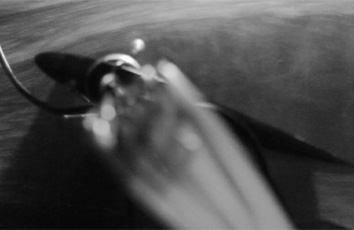
Visualization of airflow around a projectile and evaluation of its aerodynamic characteristics. The airflow around flying objects such as airplane wings changes significantly depending on their shape and attitude. This research investigates how lift and drag acting on wings change when the angle of attack and shape are altered, using low-speed wind tunnel experiments, flow visualization using smoke, and aerodynamic force measurements with balances. In addition, we will clarify how separation and stall occur, and compare the results with computational fluid dynamics analysis as needed. Based on the data obtained from the experiments, we aim to understand the mechanisms of airflow that influence flight performance.
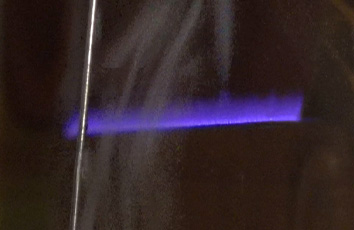
Airfoil separation control using plasma actuators A plasma actuator is a device that creates a small airflow near the surface by applying a high voltage between two thin electrodes attached to the wing surface. When the airflow separates at the wing surface, lift decreases and flight performance deteriorates. In this research, we aim to suppress separation and delay stall by installing this device near the leading edge of the wing. In wind tunnel experiments, we are investigating the effect of the plasma actuator on wing performance by comparing the aerodynamic forces and the flow field visualized using the smoke wire method when the actuator is operating and not operating.
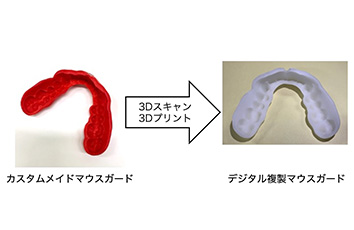
Digital replication of sports mouthguards using 3D measurement and 3D printing. Digital replication is a technology that uses a 3D scanner to measure a real object and then uses that shape data to reproduce it using a 3D printer or similar device. In this research, we are applying this technology to sports mouthguards, focusing on custom-made mouthguards created by dentists. We are evaluating the shape reproducibility and retention of the produced mouthguards, aiming to establish a technology that can provide high-quality mouthguards when needed to prevent dental and oral injuries during sports.