From the formation of the solar system to the history of Earth, the Earth's environment has changed in a wide range of ways in accordance with the evolution of the planet. In the past, Earth has already experienced phenomena that can serve as a reference for the disasters and global warming that are problems we face today. Numerical data generated through observations and numerical analyses in the field of earth science in recent years has become more complex due to advancements in observational techniques, larger computational scales, and interdisciplinary approaches. The fields of information earth science and information planetary science have seen much discussion recently as they involve a broad scientific analysis of technologies related to the observation, measurement, transmission, collection, analysis, storage, and publication of data handled in these fields. Furthermore, regarding the open use of scientific data, as exemplified by open science and open data, we believe that analyzing information from various fields and connecting it to integrated technological development will lead to information planetary science, information earth science, and data-oriented science from the perspectives of actual observation, numerical calculation, and data utilization. We actively conduct collaborative research with other research institutions, and for information on our achievements and patents, including various analyses and the development of analytical instruments and methods, please refer to Researchmap.
Basic Information
Faculty name/Affiliation
Yoshiko Sato / Department of Integrated Science and Engineering Computer Science Course
Specialized Fields
Information Earth and Planetary Science, Earth and Planetary Science, Earth Chronology
Research theme
Analysis using publicly available observational and analytical data from databases (and, in some cases, creating necessary analytical instruments) on global environmental changes and the formation history of Earth within the solar system (Hadean eon to the present).
Research keywords
Open data, Earth and planetary science, on-site analysis, automated analysis, environmental analysis
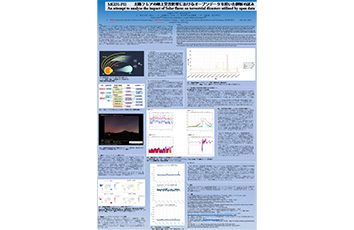
Regarding the impact of solar flares on ground-based disasters Solar activity, which is said to have an 11-year cycle, has recently been extended to 14 years, and the period of solar activity peaks is predicted to be in 2025-2026. With the introduction of space weather forecasts by NICT, it is predicted that solar activity will increase during periods when the sun is dense and there are many solar factors, leading to the prediction of cosmic ray and electromagnetic disasters. The causal relationship of disasters on Earth is difficult to determine due to atmospheric disturbances and agitations, and in order to mitigate complex disasters, open data such as open data on natural radiation and satellite data on space weather will be analyzed using the latest programming languages to assess the impact on Earth.
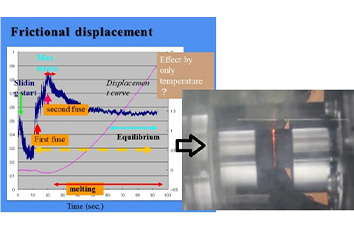
Modeling of the mechanical effects of thermal fluids on model faults and thermochronological effects. To detect age rejuvenation or resetting at high temperatures under constant frictional pressure, and to perform model calculations, we are creating simulated faults and conducting experiments. Depending on the rock type, the model fault can exceed 1000 degrees Celsius in just a few seconds. This is because the behavior of heat and friction in the fluid, which is related to thermal conductivity with respect to the distance from the friction surface, affects fault movement and the degree of solidification of the fault surface after an earthquake. Therefore, detailed modeling, including physical analysis, is necessary for disaster prevention and mitigation. We will perform detailed analysis using experimental values under varying conditions.
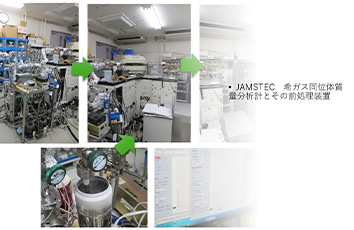
Development of an automated analyzer for on-site observation We are developing an automated analytical instrument for analyzing noble gas isotopes in fluids such as seabed, environmental water, and hot springs. The goal is to create a vacuum environment ranging from ultra-high to extremely high vacuum, equipped with physical distillation and separation devices (see Sato & Kumagai, 2020 patent; Sato & Kumagai 2024 EP patent), automating pretreatment and enabling automated measurement with a mass spectrometer. Mass filters and other components will be incorporated through collaborative research, and automation software will be created using programming languages to enable mobile analysis on research vessels, AUVs, and on-site field sites. By automating and unmanned measurements, including communication functions, during rapidly changing natural disasters, we can avoid danger to people and collect data.