The history of calligraphy is in fact the history of writing, and without writing, human history, civilization, and human will would not have been possible to continue to the present day. The calligraphy culture of Japan and China is unique in the world in that it treats characters not merely as symbols, but as a reflection of the artist's perspective and aesthetic sense. Teikyo University Research Institute of Calligraphy is dedicated to sharing the appeal and depth of this calligraphy culture.
About Calligraphy Institute
Philosophy of the Institute
Teikyo Commercial School, the predecessor of our university, was founded in 1931 and based its educational policy on three pillars: "Cultivating Character," "Practical Education," and "Encouraging Physical Education and Martial Arts." Calligraphy, in particular, was positioned as "Since calligraphy is one of the most important subjects in society, we will gather interested students and Professor them extracurricularly, and frequently hold exhibitions within the school, striving to improve their skills." Calligraphy education was actively pursued in conjunction with this "practical education." Even after the university was established, this philosophy of calligraphy education has remained unchanged, and today, it plays a part in our university's education, based on School Philosophy of "“One’s way”." The Calligraphy Research Institute aims to inherit the philosophy of "Teikyo Calligraphy," the history of calligraphy at our university, and to give back to society at large.
History of establishment
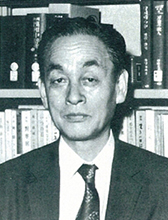
Toshiro Tsugaki (Koyama) Professor Emeritus at Teikyo University 1911-2006
Teikyo University opened in 1966, amid a yearly increase in the rate of university enrollment due to the effects of the postwar baby boom and the period of rapid economic growth. Six years after the university's opening, the university was able to invite Toshiro Tsuzuki (Koyama), who had retired from Tokyo Gakugei University in 1972, to the Department of Japanese Literature in the Faculty Faculty of Liberal Arts. Mr. Tsuzuki was a leading authority on calligraphy education at the time, and his appointment marked a dramatic development in calligraphy education at the university. In 1974, a calligraphy elective course was established within the Department of Japanese Literature, establishing a calligraphy education system centered on teacher training, forming the pillar of calligraphy education at Teikyo University that continues to this day. Then, in 1976, ten years after the university's founding, the Teikyo University Calligraphy Institute was established as Japan's first calligraphy Teikyo University Research Institute of Calligraphy 's first President, Shoichi Okinaga, to create a distinctive base for the university's humanities education and research, differentiating it from other universities. With Kozan Sekimoto as its first director, the Institute has overseen calligraphy-related courses at the university, including calligraphy history and calligraphy education, as well as a calligraphy education program for early childhood education in collaboration with Teikyo University Kindergarten.
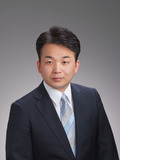
chief Junya Fukui
Since its founding in 1976, Teikyo University Research Institute of Calligraphy has been dedicated to promoting and developing calligraphy culture, primarily through educational activities at the university. Teikyo Calligraphy, the philosophy of our calligraphy education, boasts a history and achievements dating back over 80 years, dating back to before the university was founded. We aim to continue to preserve and develop this philosophy as one of the university's educational symbols. In today's society, where computers and smartphones are widespread, opportunities to write characters by hand are decreasing. It is precisely in these times that the Calligraphy Institute's mission as a university research institute is to promote the spread of calligraphy and other written cultures, and to help pass on the proud traditions and history of Japanese written culture to future generations. Currently, the Institute places emphasis on research in the field of Japanese calligraphy, while also collaborating with research in related fields such as Japanese literature and history. We are conducting research on the tens of thousands of books that have been collected since the time of our first director, Tsuzuki Kozan, as well as on valuable calligraphy works and materials that have been donated or entrusted to us. We will continue to share the results of our research through exhibitions, symposiums, and other events. We appreciate your understanding and support.