Deepen understanding and pursue your own theme with the guidance of unique faculty members
The Faculty of Liberal Arts has a large number of talented members. We have faculty members who have excellent achievements in their respective fields of specialization, and we make use of their specialties in practical learning education. By the guidance of a unique faculty member, students deepen their understanding by colliding questions and opinions, and eventually discover and pursue their own learning themes.
Visiting museums in Hachioji and folklore research
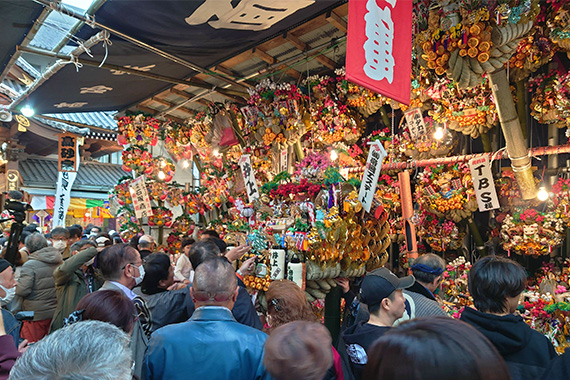
The area where Teikyo University's Hachioji Campus is located is home to a diverse range of cultures. While there are numerous cultural assets designated by the city, metropolitan government, and the national government, we focus on folk cultural assets and provide opportunities to learn about the cultures nurtured by local people. Folklore (Traditional Cultural Studies (Folklore)) is also an elective course for students pursuing curatorial qualifications. In Folklore I, students visit the Hachioji Museum as part of their classes. In Folklore II, students learn about the folk culture of the Yuki district of Hachioji City and then visit the Silk Road Museum. This provides an opportunity for students to see what is on display and how, and to consider what kind of exhibits they would like to create. Student feedback is shared with the Hachioji Museum. In the Japanese Cultural Studies (Daily Life History) class, we investigate the Tori no Ichi festival every November. By experiencing cultures that we take for granted and those we are not familiar with, students develop the ability to explore Japanese culture.
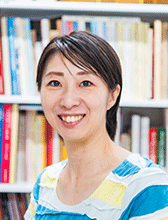
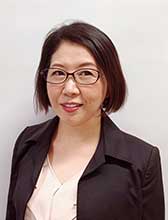
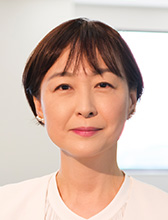
TAKAHISA Mai Senior Assistant Professor Originally from Tokyo, he completed the doctoral program in literature Graduate School Graduate School of Liberal Arts Kokugakuin University, earning a PhD in folklore. He worked as a researcher at the Kokugakuin University Research and Development Promotion Organization and as a specialist (part-time) in the Cultural Heritage Division, Lifelong Learning Department, Kanagawa Prefectural Board of Education before joining our university in 2021. He specializes in folklore and folk performing arts research.
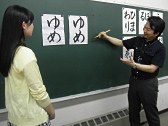
Calligraphy course is mainly taken by students aiming to obtain a calligraphy teacher's license in elementary school, junior high school, and high school. The curriculum is designed gradually and systematically, such as learning "Kana" in I, "Regular script" in II, "Semi-cursive script" and "Kanji-kana mixed" in III, and "Various formats that can be used in daily life" in IV. Before I work in this university, I was in charge of penmanship and calligraphy at a junior high and high integrated education school. In addition to being in charge of penmanship and calligraphy education at the university, I have been involved in penmanship and calligraphy in both school education and lifelong education, such as serving as a lecturer in a calligraphy course administered by a private calligraphy organization. Taking advantage of the these experiences, I would like to develop human resources who are responsible for calligraphy education in the 21st century from the three perspectives of school education, lifelong education, and arts and culture activities. I aim to develop instructors who have a broad understanding of the actual conditions of penmanship and calligraphy education, which differ depending on the characteristics of students and the region and school, and who can flexibly respond to various standards.
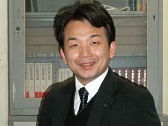
Associate Professor FUKUI Junya After graduating from the Calligraphy Expression Course in the Arts and Environment Creation Course in the Faculty of Education and Human Sciences at Niigata University, he completed his doctoral studies in calligraphy at the Graduate Graduate School of Liberal Arts at Daito Bunka Graduate School (PhD (Calligraphy)). He joined our university in 2010. He is also active as a calligrapher, serving as a director of the Yomiuri Calligraphy Association and the Shodo Koyokai. He has received the Itabashi Ward Cultural Encouragement Award and the 1st Daito Bunka University Aoyama Sugiame Award, among others.
In the field training in geography, which is a subject of the geography course, students conduct a field survey in a schedule of 2nights 3days twice a year under the escort of a faculty member. So far, we have visited Toyota City, Aichi Prefecture, Suwa Area, Nagano Prefecture, etc., where we read topographic maps, observed natural topography and townscapes, collected materials at libraries, and observed museum facilities. In addition, students hear from local people on themes such as local nature, history, culture, industry, community development, and issues. Using the various information obtained through these surveys as clues, we also considered "methods for making the local society a better society." In this way, the field training in geography can be said to be an extremely practical subject that can cultivate not only research ability but also ability to create local communities.
Mika Ichino Associate Professor ICHINO Mika Completed the doctoral program at the Graduate School of Science, Tokyo Metropolitan University, Graduate School and obtained Doctor of Science. He is a certified weather forecaster. After working at the Tokyo Metropolitan Institute of Environmental Science, the Japan Agency for Marine-Earth Science and Technology, and the National Institute of Information and Systems, he joined our university in 2026. His specialties are physical geography, climatology, and historical climatology. His main research themes include climate reconstruction using weather records recorded in diaries and old documents, and the impact of abnormal weather on socioeconomic and demographic dynamics.
Exercises using real data from the student cafeteria "Soratio Kitchen"
The Department of Department of Sociology 's Honors Program was established to provide outstanding and highly motivated students with even more enriching learning opportunities. In the Honors-exclusive courses, "Advanced Topics in Contemporary Sociology AI" and "Advanced Topics in Global Sociology A1," classes are conducted using real data from Solatio Kitchen (the student cafeteria on the Hachioji Campus), operated by Ginza Suehiro Cafeteria Service Co., Ltd., based on an agreement with the company. In these classes, students analyze actual sales data and propose strategies to increase sales or reduce procurement costs based on best-selling products and procurement costs. Students have commented that they "felt the difficulty and excitement of improving problems in the real world" and that it was "a very practical exercise using real data that they wouldn't normally have the opportunity to work with." By considering Solatio Kitchen, which they use every day, not only from the perspective of a user but also from the perspective of a manager, the students are gaining valuable learning that will be useful when they enter the real world.
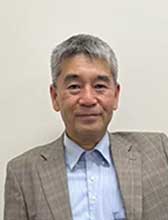
Hirokuni Oura Professor OURA Hirokuni Completed doctoral program at the Graduate School of Human and Environmental Studies, Kyoto University Graduate School. Ph.D. (Human and Environmental Studies). His areas of expertise include mathematical sociology, evolutionary game theory, social dilemmas, and issues of order
"Social business training" to participate in training at companies and NPOs
"Social business training basics (first half)" and "Social business training (second half)" are classes social enterprises(company that works on solving various social issues using business methods)that are active in Tama area where Teikyo University is located and NPOs unitedly compose. In the first half, we invite lecturers from companies and NPOs and think about various society, work, and work styles that are familiar to us. Based on this, students participate in practical training at each organization. The content of the training is not limited to daily work, and may require planning, operation, and implementation of the project. Then, in the second half, we organize a presentation as a culmination of learning and plan an opportunity to make a presentation to the community and the university. In this way, in the class, we acquire the power of "seeing, listening, experiencing, discussing, investigating, planning, and presenting" through theory and practice, and aim to acquire "power of employment" that can be demonstrated in the local community after graduation.
Associate Professor LEE Youngsook Osaka University Graduate School Graduate School of Human Sciences Doctoral Program Credits After leaving the university, he obtained a doctorate in human sciences from the same university. After working as a volunteer coordinator at a university volunteer center and a specially appointed researcher at a food bank (NPO), he has been in his current position since April 2013. He specializes in volunteer and NPO theory.