Topics
- Social/Community Engagement
October 19, 2026
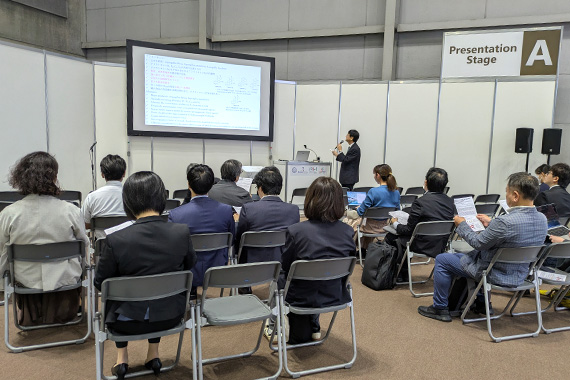
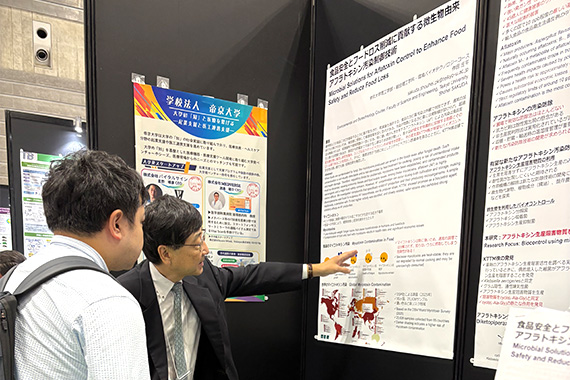
Professor Shohei Sakuta of Faculty of Science and Engineering exhibited at Bio Japan 2026, introducing a technology for controlling aflatoxin contamination using microorganisms atUtsunomiya Campus
From Wednesday, October 7th to Friday, October 9th, 2026, Bio Japan 2026 was held at Pacifico Yokohama (Yokohama City, Kanagawa Prefecture), and Professor Shohei Sakuta Environment and Biotechnology Course Department Department of Integrated Science and Engineering Faculty Faculty of Science and Engineering Teikyo University, exhibited at the event.
This exhibition is a large-scale matching event that promotes collaborative research and commercialization of research among domestic and international companies and universities involved in the bio-industry, including drug discovery, healthcare, and energy. Approximately 1,200 companies exhibited and 22,835 people attended over the three days.
At this exhibition, Professor Sakuta presented a technology for controlling microbial aflatoxin contamination that contributes to food safety and food loss reduction. Aflatoxin (AF) is a toxin produced by mold that mainly grows on grains and nuts, and is known as one of the most carcinogenic substances among natural materials. These mycotoxins remain in food even after the mold dies and are hardly broken down by normal cooking. Currently in Japan, there are more than 100 cases of violations of the Food Sanitation Act each year due to AF contamination of imported foods, and since contaminated food is discarded, it is a cause of economic loss and food loss.
Professor Sakuta has focused his research on substances that specifically suppress AF production and the microorganisms that produce these substances, developing an AF contamination control technology that can be used as a biocontrol agent. This technology is expected to be a next-generation biopesticide with low environmental impact, and the inhibitory substance is expected to be used as a lead compound for the development of AF production inhibitors.
Food trading companies and compound synthesis manufacturers visited our booth, and we exchanged ideas on how to implement the exhibited research findings in society. Going forward, our university will continue to actively return its intellectual property to society and support researchers' research activities.
Click here for information about Professor Shohei Sakuta.
Click here for information about Bio Japan 2026.
Click here for information about Teikyo Technology Transfer Center