Topics
- Education and Research
September 28, 2026
The joint medical faculty course "Medical Communication" was held atItabashi Campus in the 2026 academic year.
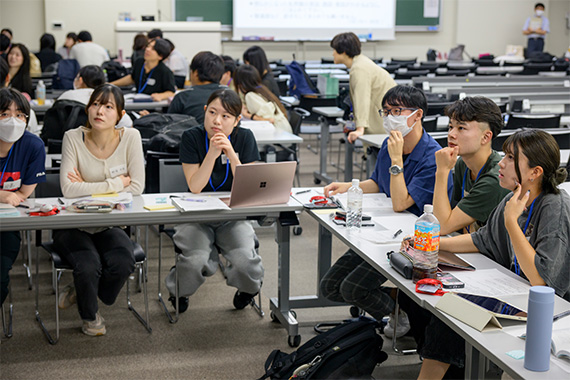
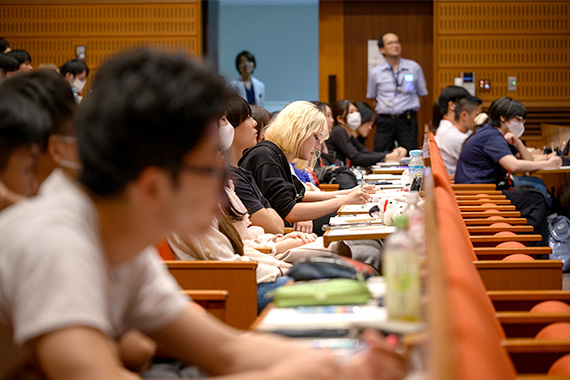
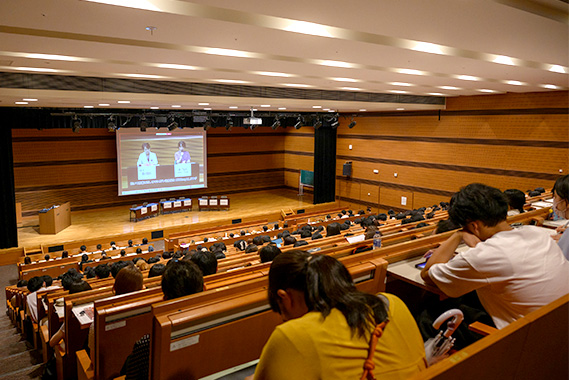
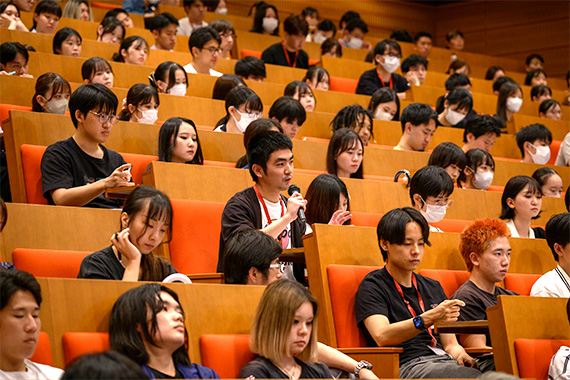
On Wednesday, September 9, and Thursday, September 10, 2026, at Teikyo University (Itabashi Campus), a joint “Medical Communication” class was held for students from seven departments across three faculties: School of Medicine Department of Medicine, Faculty of Pharmaceutical Sciences Department of Pharmaceutical Sciences, Faculty of Medical Technology Department of Orthoptics, Department of Nursing, Department of Radiological Technology, Department of Clinical Laboratory Science, and Department of Sport and Medical Science Emergency Medical Technician Course. Approximately 880 fourth-year students participated.
This course is a multidisciplinary collaborative education program that leverages the educational environment of Itabashi Campus, where medical faculties are concentrated and the School of Medicine Hospital is located next door. The aim is for students who will one day work in healthcare as different professionals to form a team and bring together their respective expertise and perspectives to consider better treatment and care for patients. The emphasis is not simply on sharing information and opinions, but on experiencing the process of understanding each other's proposals, engaging in discussions, and ultimately culminating in a unified treatment and care plan.
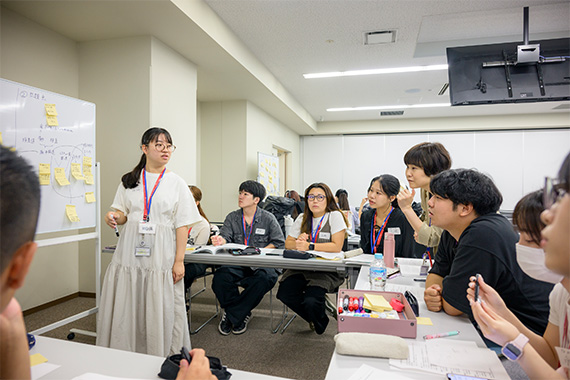
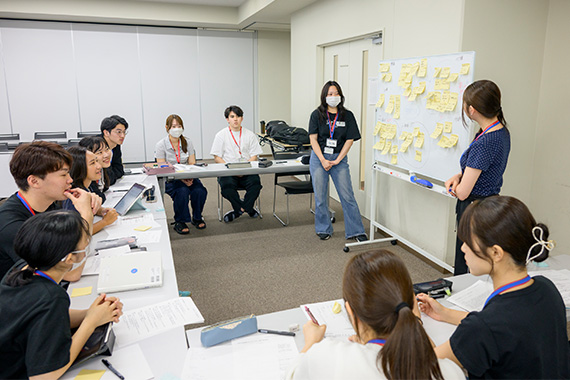
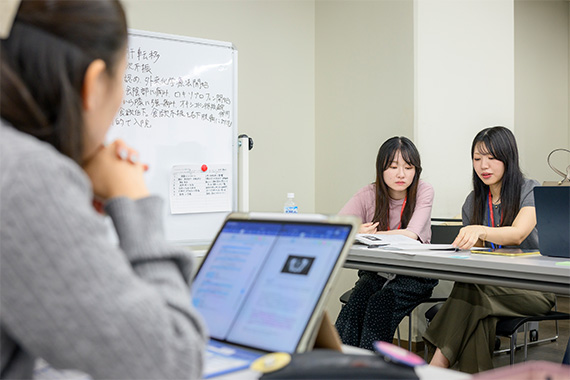
This year, we conducted group work on the theme of "Treatment and Care for the Suffering of Patients with Recurrent Colorectal Cancer." In addition to physical symptoms such as pain and loss of appetite associated with cancer recurrence, the students developed treatment and care plans for patients who face various challenges, including their feelings about treatment, work, relationships with family, and hopes for their future lives. The students first shared information obtained from case studies, organized the problems faced by the patients from physical, psychological, social, and spiritual perspectives, and then considered treatment and care plans, utilizing their knowledge and perspectives from their respective fields of expertise.
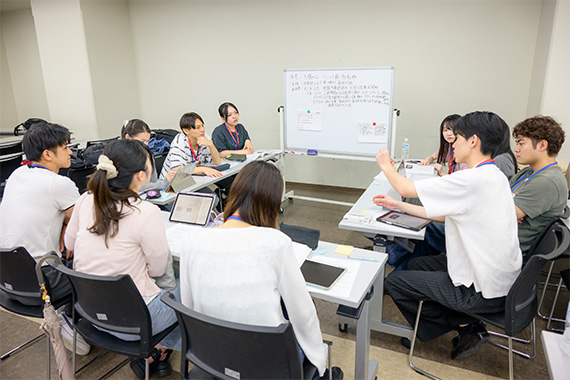
In the group discussions, a variety of points were raised, including how to address symptoms such as pain and loss of appetite, how to use medical narcotics, what might be causing the medication to be ineffective, how to alleviate the discomfort associated with examinations and travel, and how to support work and family relationships. Even when looking at information about the same patient, different areas of expertise, such as medicine, pharmacy, nursing, clinical laboratory, radiology, orthoptics, and emergency medicine, focus on different aspects. The students realized that knowledge they considered "common sense" was not necessarily the same for other professions, and they experienced the importance of clearly communicating their respective expertise and listening to others' opinions.
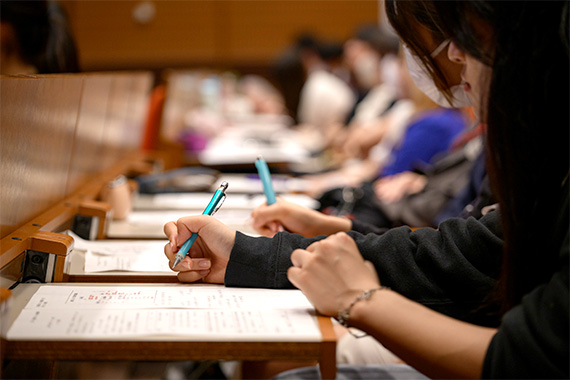
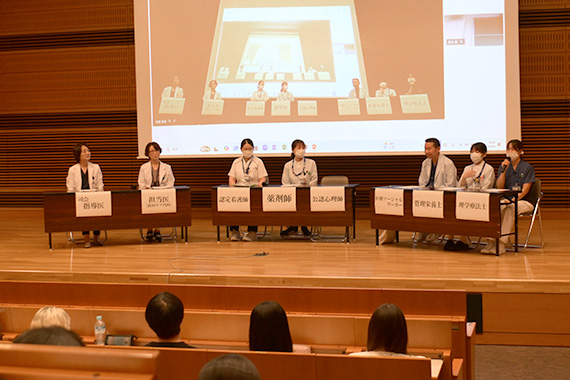
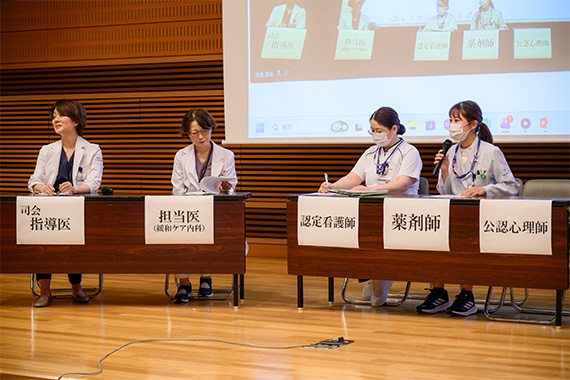
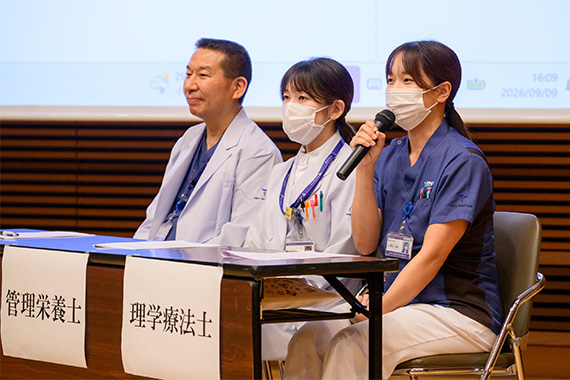
The students not only shared their proposals, but also discussed how to develop a single treatment and care plan as a team, confirming a common goal: "What do we aim for in the patient?" Through the process of adjusting differing opinions, considering priorities, and reaching a consensus, they learned about interprofessional communication that is relevant to actual medical settings. Following the group reports on their results, they watched a multidisciplinary mock conference conducted by Palliative Medicine team at School of Medicine Hospital. The mock conference featured discussions among a multiprofessional team working with the attending physician from an early stage to treat and care for the same case, addressing not only the patient's physical suffering but also psychological and social issues, aiming to maintain and improve the patient's and family's QOL (quality of life). The mock conference focused on the assessment of painful symptoms and approaches to alleviation, demonstrating how team members, from their respective professional perspectives, perceive the patient, share information, and develop treatment and care plans. By comparing their own discussions with those of actual medical staff, the students learned about the breadth and depth of discussions in clinical settings. Following the viewing, we also participated in a live Q&A and discussion with the palliative care team staff, deepening our understanding of how to reconcile patients' wishes with medical decisions and how to share information obtained by each profession within the team.
After the class, students shared comments such as, "I realized that even with the same information, different professions focus on very different things," "I learned that even specialized knowledge that is commonplace to me needs to be explained in a way that is easy for other professions to understand," "We need to consider not only the patient's actions, but also the thoughts and lives behind them," and "I realized that Team Medical Care is not simply about many professions being involved, but about bringing together each person's expertise toward a common goal of what is important for the patient."
At our university, we will continue to support each student in developing their own expertise, engaging in dialogue with peers from different fields, and leveraging each other's knowledge and perspectives to grow into healthcare professionals who can work together to provide better medical care for patients and their families. Taking advantage of the unique characteristics of our Itabashi Campus, which houses numerous medical faculties, we will further enhance interdisciplinary, multidisciplinary education that connects students to actual clinical practice.