
Topics
- Education and Research
July 9, 2026
A special lecture was held atHachioji Campus, featuring a guest speaker from Fukutsu City, to learn about the role of stakeholders in supporting public policy.
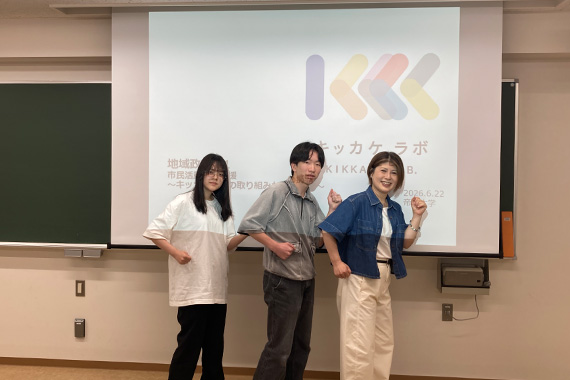
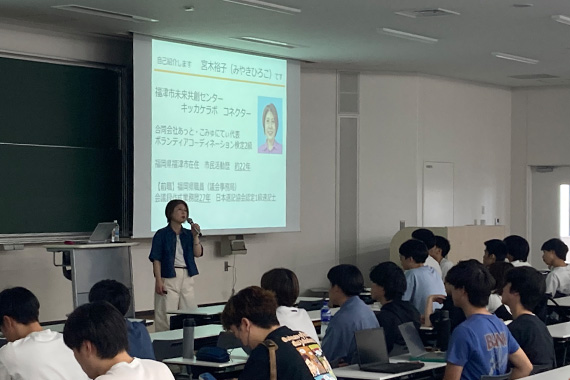
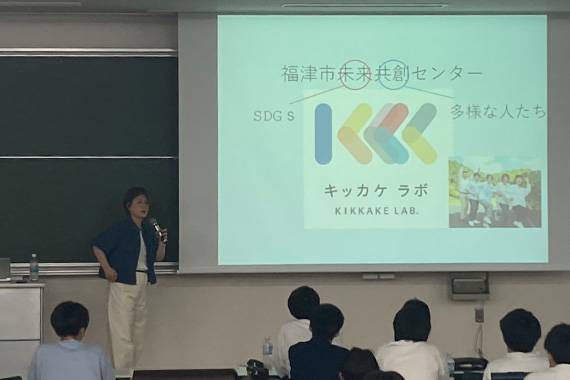
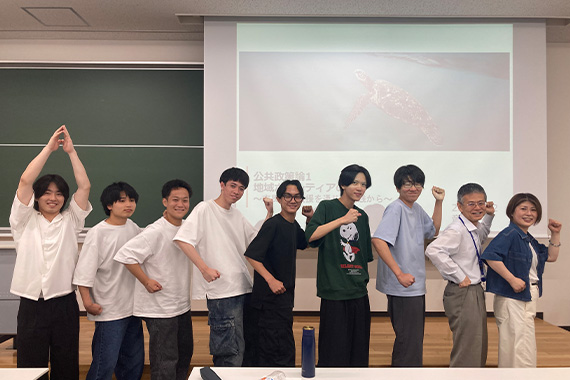
On Monday, June 22, 2026, at Teikyo University's Hachioji Campus, Associate Professor Akira Parki of the Department Department of Political Science of Faculty of Law, gave a special lecture as a guest speaker in his "Regional Policy Theory I" and "Public Policy Theory I" classes. The guest speaker was Yuko Miyagi, a former Fukuoka Prefecture employee and connector at the Fukutsu City Future Co-creation Center "Kikkake Lab".
Amidst declining birth rates, an aging population, and the weakening of local communities, solving regional issues requires collaboration not only from the government but also from diverse stakeholders such as citizens, NPOs, and businesses. In this lecture, students learned about the significance of actively engaging in local communities and the broadening scope of stakeholders responsible for public policy, through the experiences of practitioners working on the front lines of supporting citizen activities. Mr. Miyagi, who is speaking for the second time following his presentation in 2024, is working to connect diverse stakeholders, drawing on his experience as a Fukuoka Prefecture employee. He is also currently working on establishing the NPO At Community, which is rooted in the field of supporting citizen activities and community development.
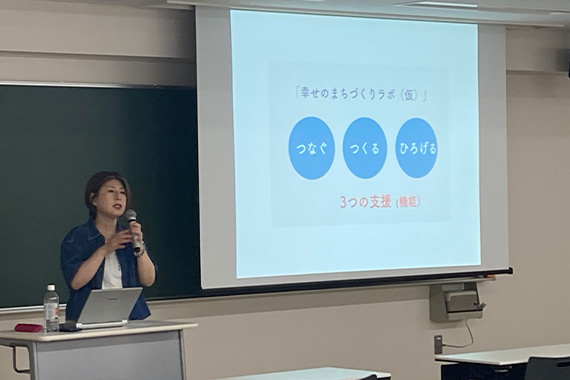
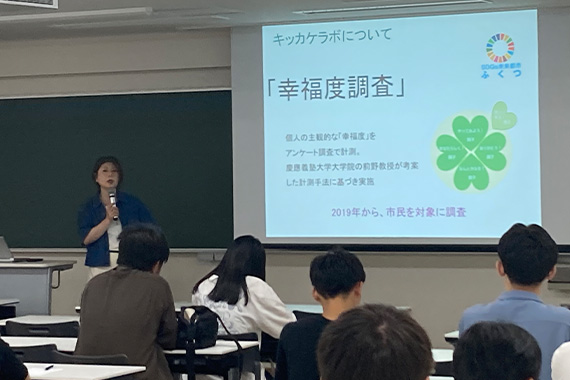
In the "Regional Policy Theory I" class that day, the lecture was themed "Supporting Citizen Activities - Challenges from the Kikkake Lab Initiative," and the speaker shared how, based on their experience working in the Fukuoka Prefectural Assembly Secretariat as a prefectural employee, they came to think about the importance of democracy and citizen participation. They also explained Fukutsu City's initiatives as an SDGs Future City, its happiness survey, and the role of "Kikkake Lab," and spoke about the importance of mechanisms that connect people working in the community and support citizen activities.
Ranao Kakizaki (2nd year Faculty of Law), who took the course, commented, "I was impressed by the work of going out into the community as a connector and connecting people and organizations. I felt that it is important to address the social isolation of the elderly and to create spaces where people who want to learn about the community can participate. I thought it was wonderful how they increased the number of people involved in the community by utilizing the perspectives of the government, NPOs, and citizens."
In the subsequent "Public Policy Theory I" class, the lecture was given on the theme of "Recommendations for Community Volunteering - From Practice Through Supporting Citizen Activities." As a required course for first-year Department of Political Science, students learned about the broad range of actors who play a role in public policy, and deepened their understanding of the basic concepts of volunteer activities and opportunities to get involved in their local communities.
Yuto Mori (1st year Faculty of Law), who took the course, said, "I learned about the four principles of volunteer activities and realized that even the litter picking I've done so far takes on different meanings depending on whether it's done spontaneously or not. I learned that it's not enough for anything to be spontaneous; it's also important to understand and share the rules and manners of the activity. Activities like Patrun, which get involved in familiar issues in a unique way, are interesting, and I thought I'd like to get involved in the community through something I enjoy."
Both courses are core lectures in the Public Policy course of Department of Political Science. Through these classes, students broadened their understanding of the stakeholders supporting their communities beyond just the government to include citizens, NPOs, businesses, and themselves, learning that public policy is supported by the collaboration of diverse stakeholders. They also came to understand that solving local issues is not solely the responsibility of the government, but begins with small participation and actions by individuals, and this provided them with an opportunity to consider how they themselves can become stakeholders in their local communities.
The Department of Political Science in Faculty of Law will continue to invite practitioners who are active on the front lines of administration and local communities as guest speakers, promoting learning that connects theory and practice, and fostering students' ability to proactively engage in solving social issues.
Click here for information about Department of Political Science Faculty of Law
Click here for information about Associate Professor
For Admission Info, please click here.
Click here for information about Fukutsu City Future Co-creation Center Kikkake Lab.