Topics
- Education and Research
October 7, 2025
2025 Joint Medical Faculty Class "Medical Communication" HeldItabashi Campus
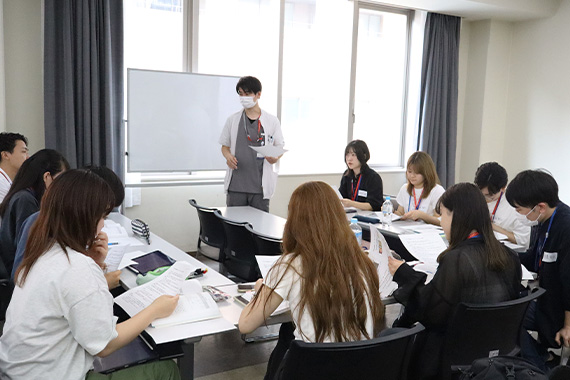
On Wednesday, September 10th and Thursday, September 11th, 2025, a School of Medicine Department of Medicine Department of Orthoptics "Medical Communication" was held at Teikyo University's Itabashi Campus, bringing together seven departments from three faculties: the Faculty of Medicine (Department of Pharmaceutical Sciences Faculty of Pharmaceutical Sciences), Faculty of Medical Technology (Department of Nursing, Department of Clinical Laboratory Science Department of Radiological Technology, the Department of Department of Sport and Medical Science, and the Faculty of Sports Medicine Emergency Medical Technician Course).
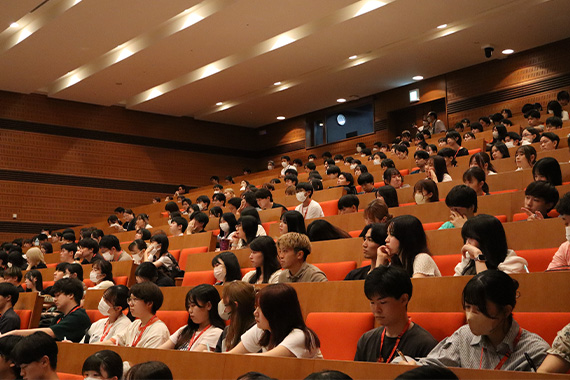
This class is an interprofessional collaborative education program that takes advantage of the unique educational environment of this campus, where medical faculties are gathered and the Faculty of School of Medicine Hospital is located next door. The purpose is to understand the importance of Team Medical Care and to demonstrate the role of a multidisciplinary team. Through this class, students will acquire the communication skills to accurately convey and share information, as well as the ability to identify physical and psychosocial problems and find solutions through repeated proposals and discussions. Starting this academic year, the program has been implemented in all medical departments, with approximately 850 fourth-year students participating.
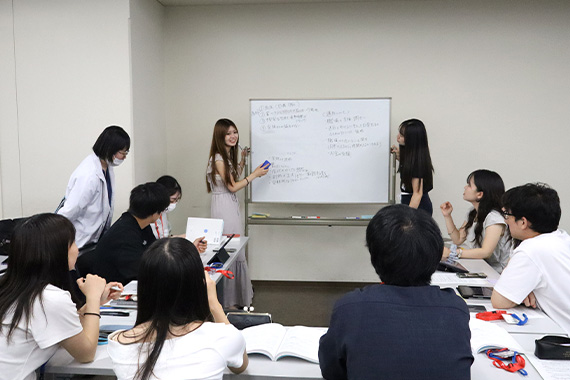
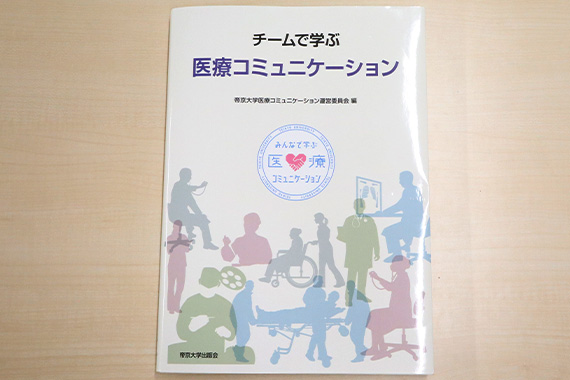
In the class, students were divided into teams of 10 to 11 people and worked in groups on the theme of "End-stage renal failure and renal replacement therapy: Planning a treatment and care policy for a man who chose to start hemodialysis," while referring to "Team Learning: Medical Communication (Teikyo University Press, March 2025)," a new book co-authored by faculty members of our university's Medical Communication Steering Committee and newly published in 2025.
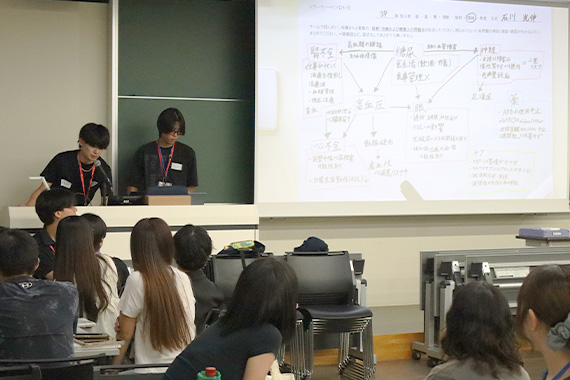
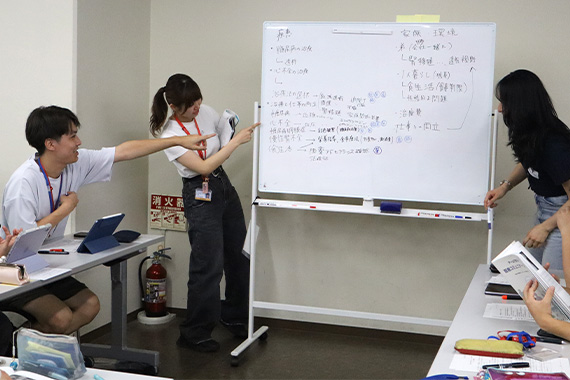
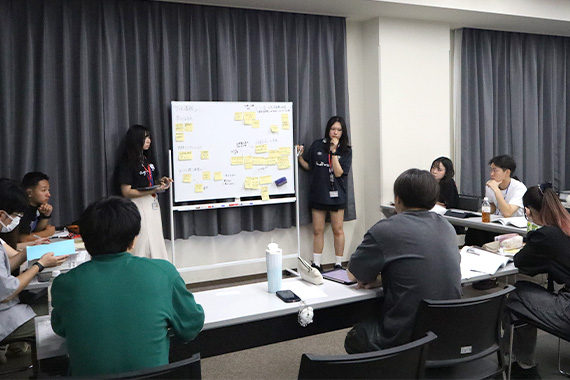
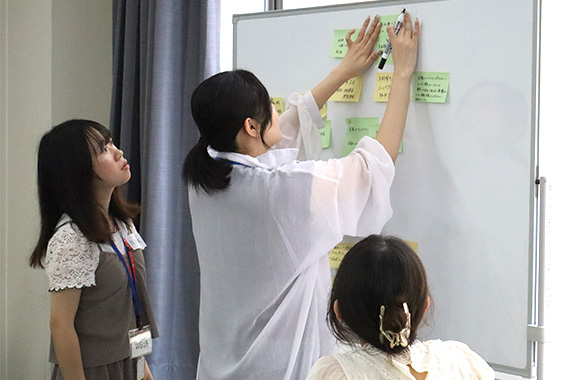
First, each group read through case information and terminology related to diagnosis and treatment, and shared information as a team using sticky notes and whiteboards to consider future treatment plans. Next, they created a problem list regarding the patient's medical, psychological, and behavioral conditions, compiled specific treatment and recuperation plans, and presented their group plans. By viewing patients from the perspectives of various medical professions and sharing their opinions, the participants experienced firsthand the importance of interprofessional communication and multidisciplinary collaboration in a medical team.
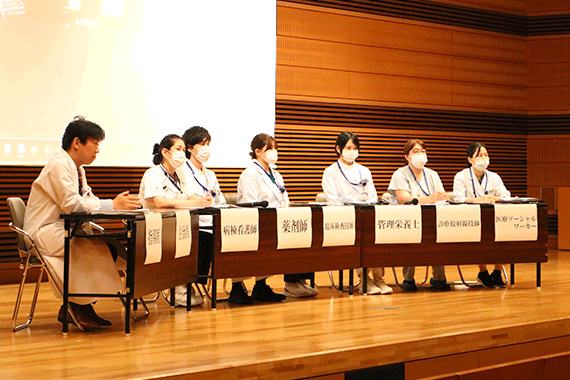
After the group presentations, the students watched a video of a mock multidisciplinary conference based on the same case study, conducted by the Internal Medicine Team at the University School of Medicine. The students watched intently as the medical team, consisting of physicians, pharmacists, Clinical laboratory technician, registered dietitians, radiological technologist, and medical social workers, assessed the patient and discussed the treatment and care decision-making process. They listened intently, taking notes and comparing their own findings with the discussions at the multidisciplinary conference, which mimicked a real clinical setting. Members of the medical team also took to the stage for a Q&A session, offering words of encouragement that "problems that cannot be solved alone can be solved by working together," which deeply resonated with the students. Hearing helpful advice directly from a professional perspective provided a valuable opportunity to learn about the significance of Team Medical Care and multidisciplinary collaboration, as well as future career paths.
Going forward, our university will continue to support each student in honing their own expertise, working together with related professionals, and growing into medical professionals who continually consider what medical care is best for patients. We will also enhance our inter-faculty, multi-disciplinary education to cultivate personnel who can immediately contribute to Team Medical Care that has become essential in modern medicine.